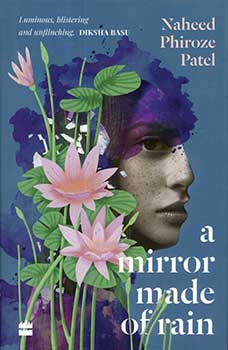
a mirror made of rain by Naheed Phiroze Patel. Published in 2021 by Fourth Estate, an imprint of HarperCollins Publishers, A-75, Sector 57, Noida, Uttar Pradesh 201301. Pp: 286. Price: Rs 499.
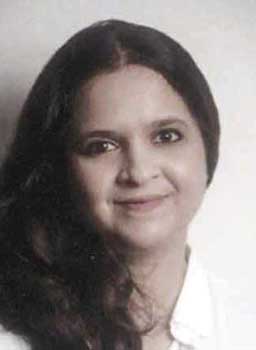
Stereotypes of motherly love are no longer in fashion and Naheed Phiroze Patel (pictured) in her novel, a mirror made of rain, describes a fraught and tempestuous relationship between Asha, the mother, and Nooni the daughter; the entire atmosphere of a dysfunctional Indian family is portrayed with violence and bitterness.
 Patel starts the novel with a party thrown by Sheila Sehgal — to celebrate her son Sid’s forthcoming marriage with Anushka — an ideal way of introducing several characters most of whom play an important part in the novel. Within a few pages we encounter Asha, who has drunk large quantities of vodka and looks "concussed, as if the alcohol had struck her like a mallet.” The author also portrays the tension between mother and daughter in a vividly palpable manner. We see Nooni’s decisiveness when she threatens Asha that she will call her husband Jeh’s parents, who will seriously consider putting her in a rehab center. On the other hand, Patel shows Jeh’s ineffectiveness as he does not seem to react decisively when he sees his wife in a drunken stupor. We also meet Rhea Puri, Jeh’s cousin and Asha’s friend, who is already drunk. We encounter Nooni’s childhood friend, Ammu, with whose brother Nooni had a brief relationship. Thus, within the first few pages, in an economical manner, Patel introduces the reader to many of the main characters.
Asha is an alcoholic when the novel commences. But she has not always been addicted. Though she has had an unhappy marriage, things worsened when, as Nooni wrongly thinks, she lost her son in the third trimester, whereas in actual fact the boy was born but died due to some complications. Patel points out that at one point Asha was a capable and kind person who had started an orphanage to take care of babies abandoned on her doorstep. Jeh, instead of facing Asha’s alcoholism, refused to accept the situation and, as Patel shows retreated into the peace and quiet of his study. Jeh is tied to his father’s opinion and is always craving his approval.
 Patel places Nooni against this unstable background as she finds her way in the world, making a host of wrong decisions. Hating her mother, Nooni succumbs to the same problem with addiction and substance abuse, with devastating consequences. Life for Nooni has been traumatic and violent as she faces total neglect from her mother as well as dealing with bitter and acrimonious fights between her parents. She craves for her mother’s approval and affection and takes refuge in alcohol. Whereas Asha always referred to the orphans as "My kids or my orphanage bachchas,” Nooni was termed "the brat, the little nuisance.” Happy memories of life with her mother are few and far between. Asha even arrives five hours late to fetch Nooni from her school. Faced with neglect, lack of affection, she only remembers the alcoholic binges, the breakdowns and the outbursts of anger. Patel shows how Nooni grows from a lonely young girl to a troubled adult and how the damage caused is now irreparable. She has disastrous relationships with a series of men who abuse and abandon her which further results in a total loss of self-esteem.
In Part Two of the novel, Patel makes a sudden leap in time where Nooni is in New Delhi and is received at the airport by Veer, about whom we know nothing. They obviously seem to be very much in love. In fact, she has now come to New Delhi to meet his parents and get married. Patel skillfully fills in the gaps. We learn that after abandoning her family, Nooni moves to Bombay where she works and spends three very happy years. We also learn about Nooni and Veer’s meeting and the gradual unfolding of their relationship. Patel describes the opulence of a traditional Punjabi wedding in great detail. She presents much humor for the reader at the disgust Nooni feels as she is forced to participate in the conventional rituals of a Punjabi wedding and having to play the role of a "sanskari bahu (traditional daughter-in-law)” to please Veer’s parents, which she is very uncomfortable with as it is anathema to her.
How will this marriage work? It does not start off on a very positive note with Nooni facing bouts of depression and panic. The question Patel places before us is what sort of mother will Nooni make? Will she repeat the mistakes of the past? Will she make peace with her mother eventually?
Though the novel is very readable and the characterization very perceptive, Patel often tends to overstate her point. Asha’s neglect of Nooni and their bouts of drunkenness could have been shortened. Patel makes her point very effectively in a few scenes but it very often seems that she labors to get her point across by repeating the same situations which underlie Asha’s neglect of Nooni and several scenes in which the drunkenness of both the mother and the daughter are described. Similarly, the descriptions of the conventions of a traditional Indian wedding are a bit overdone. The description of the dysfunctional family is an often recurring theme in American fiction. This subject is dealt with to a lesser extent in Indian fiction even though the same would apply to quite a few families in this country as well. One wonders why. F. G.