Karan Ghelo, Gujarat’s Last Rajput King by Nandshankar Mehta, penned in the 19th century is deemed to be the first original
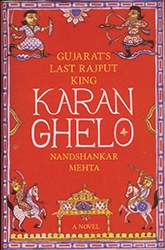
novel written in Gujarati. Having been out of print for the last 150 years since its publication in 1866, it is now available in English, translated by Tulsi Vatsal and Aban Mukherji. Published by Penguin Viking in 2015, the hardback 332-page book is priced at Rs 499. (Karan Ghelo has just been brought out in a paperback edition by Penguin too, priced at Rs 399.)
The novel provides a rich and more complete picture of the history and literature of Gujarat as well as the intellectual ferment in a traditional society suddenly exposed to western ideas. Even though it deals with events in the late 13th and early 14th century, it indirectly throws light on 19th century conditions as well.
Speaking to Parsiana, Mukherji recalls her connect with the novel: "The tragic tale of Karan Vaghela (Ghelo), the last Rajput king of Gujarat, is woven into my childhood memories. At school I was an avid reader of historical novels and, together with K. M. Munshi’s riveting stories of medieval Gujarat, I also came across Chandravadan Mehta’s play Sandhyakaal (Eventide) which deals with the tragedy of Karan Ghelo.
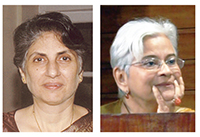
Translators Aban Mukherji (left) and Tulsi Vatsal
"But I think I first heard this tale from my mother (Pareen Lalkaka, née Nanavutty). She and her sisters grew up in the Lucknow of the 1920s. They were taught Gujarati by their resident tutor, fondly addressed as Mehtaji. He not only taught them the rudiments of the language but also read out passages from Karan Ghelo and Saraswatichandra. My mother must have been deeply moved by Raja Karan’s story. She never forgot it and often used to urge me to read it. So, years later, when Tulsi Vatsal and I read the book and decided to translate it, I felt I was reconnecting with the past.”
In the year 1299 Raja Karan is defeated by Sultan Alauddin Khilji’s forces, sealing the fate of Gujarat and ending the last Rajput dynasty. There is a wealth of description in the novel which brings to life the manners and mores of the times for the reader. The tale is tortuous but the reader can easily follow the multiple threads of the tapestry, so well has it been woven into words. Meticulous in their translation, the duo has remained true to the original novel, the language and style of which are surprisingly modern and vivid with an underlying quiet sense of humor. Mehta’s portrayal of women is sensitive and humane. There is a lengthy aside on companionate marriages (unions based on the mutual consent and equality of the partners for the purpose of companionship rather than with the expectation of child-rearing or financial support) and a reasoned criticism of child marriage. The author’s reformist leanings shine through the novel. In this amazingly balanced view of the past, Mehta has referred to a variety of sources both indigenous, local and Persian.