For the love of India: The Life and Times of Jamsetji Tata by R. M. Lala. Published in 2004 by Penguin Books India (Private) Limited, 11, Community Centre, Panchsheel Park, New Delhi 110017. Pp: xix + 247. Price: Rs 395.
There is a curious parallel between the biographies of Mahatma Gandhi and Jamsetji Tata. The Life of Mahatma Gandhi, written by Louis Fischer, is far more inspirative than most other biographies of the Mahatma. Similarly, Frank Harris’s Life of Jamsetji N. Tata is presented as a "chronicle” but, even so, it is more inspirative than Russi M. Lala’s biography, For the love of India, which is more matter-of-fact. But Lala’s life of J. R. D. Tata was certainly inspirative, as its very title, Beyond The Last Blue Mountain, suggests. Lala not only admired J. R. D. (every biographer has an element of hero worship in him), but had close and frequent contacts with him. But he never met Jamsetji Tata, and hence the personal touch is lacking. Harris also never met him, but having been commissioned by Jamsetji’s son Dorab to write his biography, he had access to considerable material from the admiring son for his father. This is not to suggest that the two foreigners loved and admired the subjects of their biographies more than Indians themselves did. Rather, it could well be that foreigners with their deep-rooted prejudices were taken by surprise that the country they held in subjugation could produce two such extraordinary men.
Nevertheless For the love of India is eminently readable. With a generosity rare in the usual biographer, Lala not only mentions the several other biographies of Jamsetji, but quotes extensively from them, particularly from Harris’s classic chronicle, D. E. Wacha’s The Life and Lifework of J. N. Tata, Behram Saklatvala and K. Khosla’s Jamsetji Tata (in the Builders of India Series), William Damon’s Noble Purpose and B. V. Subbarayappa’s In Pursuit of Excellence: A History of the Indian Institute of Science. Jamsetji was a many splendoured man, so these various biographies help in capturing the different facets of the man, the great thinker and achiever he was. Lala’s biography has the further advantage that he was able to draw upon fresh material from the India Office Library and other archives, and from Jamsetji himself, for in addition to all his other gifts, Jamsetji had the gift of words, and his prolific writings on his travels around the world, and on his motivations for launching his various projects, offer a peep into his grandiose purposes that were second nature to him.
The broad outlines of Jamsetji’s career are well known — how for finer cotton he launched experiments to grow Egyptian long staple cotton in India; how his "divine restlessness” led him to experiment with growing silk and coffee, and particularly to revive the flourishing silk industry of South India; how he forayed into land and reclamation schemes with the help of land and estate agent, Jamsetji E. Saklatvala, and planned a Mahim River Reclamation Scheme and another for converting Mahim Creek into fish ponds, and indulging in his other fascination of raising turtles; how with the help of his devoted and dedicated sons, Dorab and Ratan, he too prepared a report, in the manner of his friend Dadabhai Naoroji, on contemporary millionaires’ profits for the previous 10 years "which proved a vindication of those who contended that the excise duties (imposed by British rulers) constituted a serious burden upon the cotton industry”; how, enraged that the foreign shipping line P&O (subsidized by the Indian taxpayer) was charging higher freight rates for Indian than for British goods, he launched a shipping line which, however, failed, the only failure in his illustrious career, owing to circumstances beyond his control.
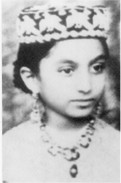
Jamsetji’s daughter Dhunbai
But all these were only the preparations, promising preludes to the three enterprises with which his name will be associated for all time — the iron and steel works in Jamshedpur, the hydro-electric schemes which made Bombay independent of coal, presenting the city with a source of cheap, clean power; and the Indian Institute of Science at Bangalore, which provide Indian postgraduate students with an education in science second to none in the world. The story goes that on a visit to Manchester he went to a lecture by the well-known writer Thomas Carlyle. One remark by Carlyle got stuck in his mind: "The nation which has the steel will have the gold.” The seed flowered into the steel city, Jamshedpur. Lala describes in fascinating detail how Jamsetji laid the foundations of these three ventures but did not live to see the results. However, he did live to see the opening of what was to become the pride of the city he loved, the Taj Mahal Hotel, reckoned to be among the finest hotels in the world.
The book sustains interest all through because of the abundance of anecdotes it provides. On a visit to the Holy Land, Palestine, Jamsetji’s companion started grumbling about the horse ride. "His incessant grumbling,” wrote Jamsetji in his diary, "could have tried the patience of a saint.” Then, Jamsetji saw a curious-looking oblong wooden box tied to mules at both ends, carrying a lady of obvious wealth. Jamsetji wanted to hire a similar "box” for his companion, who replied, "having had enough trouble with one horse, he had no desire to entrust his body to the mercy of two mules.”
Jamsetji’s sisters Ratanbai (left) and Virabai
Proceeding to Jerusalem, they came upon rusting nails in a stone wall which had reportedly been used for the Cross on which Jesus Christ was crucified. "It was said,” Jamsetji wrote, "the nails were making their way through it imperceptibly, and when they had all passed through, the Day of Judgement would arrive. I don’t think any of them had progressed on their journey through more than a quarter of an inch, and I thanked God that the Last Day would not interfere with any of my calculations.”
There is the story of George Nathaniel Curzon on his first visit to Bombay at the age of 26 before he became Viceroy of India. He could have stayed at the Viceregal Lodge itself, but chose instead to stay at the Great Eastern Hotel. At the same time, he said that the next time he visited India, it would be as viceroy. And so it happened. Small wonder, because in the House of Commons when he was only 21, he performed so well that he came to be known as "the coming man.”
The most touching anecdote, which should be an eye-opener for the frenetic proponents of Hindutva, is about a fire that broke out at the Tata Steel plant when a ladle carrying 75 tonnes of molten metal crashed to the floor, injuring several workers. The general superintendent John Keenan could carry only one of the injured men to the hospital in his small car. He chose the one who seemed to have a better chance than the others to survive, and told his helpers to carry him to the car. But the man, a Hindu, refused. Turning his head feebly, he nodded towards the body of his half-burnt Muslim colleague and said, "Hamaré bhai ko lé jao (take my brother).” Comments Lala: "The Hindu who was in pain and in danger of death remembered not that the Muslim was of a different faith but that he was his brother.”
Lala: on a voyage of discovery
When the Winged Chariot drew fearfully near, one of ailing Jamsetji’s last acts, typically, was to provide Rs 3,000 from the Tata Companies and Rs 2,000 from his personal account for the benefit of widows and children of soldiers killed in the Russo-Japanese War. He was abroad at the time and, when the end came on May 19, 1904, he was buried at the Brookwood Cemetery in England to the recital of the geh sarna prayers in Avesta.
For the love of India is a fitting tribute to a man "still loftier than the world suspects.” A leader of men, a great strategist with a quite extraordinary business acumen. A lover of life and, as a Zoroastrian, of the good life, with an eye for beauty whether it be of a beautiful woman or of a majestic monument like the Taj Mahal Hotel. A man of deep compassion whose benevolences were not confined to those less fortunate than himself but, more constructively and far-reachingly, to those thousands of poor but talented and promising young men and women so that they would not be denied the opportunity to fulfill their potential to make India a worthier place to live in.
One wishes that Indian universities would have the wisdom to make books like For the love of India compulsory reading for students in schools and colleges. There is no finer way to express gratitude for a great Indian’s far-sightedness and for putting that far-sightedness to the most commendable use.
Burjor Karanjia