Half-Blood by Pronoti Datta. Published in 2022 by Speaking Tiger Books LLP, 125-A, Ground Floor, Shapur Jat, New Delhi, 110049. Pp: 264. Price: Rs 499.
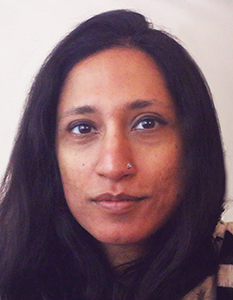
Pronoti Datta’s (pictured) Half-Blood is an engrossing first novel set in Bombay. Datta is familiar with the city as she worked as a journalist covering society and culture. She ensures that the reader realizes that this is a Bombay book as there are several perceptive descriptions of Ballard Estate and Apollo Bunder as well as references to several catastrophic events that shook the city like the 26/11 terrorist attacks and the floods of July 2015.
 It is always interesting to get an "outsider” view of the community. Parsi novels generally tend to be a bit incestuous as they are written by Parsi novelists and most often read by Parsis. The "Parsi atmosphere” can sometimes be a bit overwhelming and the themes most often dealt with are popular subjects of the day like the disposal of the dead, the dwindling community, the status of women marrying outside the community and the fate of their children.
Hence, it is interesting to read a novel about the treatment given to "fifty-fifties” or adhkachrus, illegitimate children born of Parsi fathers and often tribal women who are generally not the wife but a mistress. Burjor Elavia is the offspring of such a relationship.
The novel starts with a letter written by Burjor to his daughter, Mahtab, alias Moonie, alias Maya, who is the protagonist of the novel. All he has left her is a box with objects that were important to him and the names and addresses of three sources who would give her information about him if ever she is curious to find out his history. Maya has no interest in her past and puts off her guardian, Mini, when she tries to inform her about her antecedents. When Mini gives her the box on her 18th birthday, Maya confesses it was moment she both "dreaded and wanted.”
It takes her more than a decade to finally come to grips with the contents of the box. Her curiosity is aroused when she reads an obituary in the newspapers acknowledging a loan from Burjor contributed to the deceased becoming a successful businessman. Datta emphasizes Maya’s drifting nature and her inability to get a grip on her life. At the age of 34 she is in a dead-end career as a journalist with a substandard newspaper. She hates her job but is unwilling to search for alternatives. She is unable to immerse herself in any hobby and Datta gives ample evidence of how Maya spends her free time, smoking marijuana and having indiscriminate and unsatisfactory sex. She has made no vital decisions in her life. It was Mini who got her an internship with a newspaper, Mini who sent her to study in Delhi, Mini who chose she should study philosophy.
Datta draws a parallel between Burjor and Maya. Burjor too had a stream of unsatisfactory affairs: Hufrish Desai, whose husband had erectile problems, was one of them; Philomena, a Goan Catholic girl from Dhobi Talao — who expected Burjor to marry her and who made a scene when he showed he had no interest in doing so — was another. He is forced to marry Armaity, Maya’s mother, only because he got her pregnant. Maya wonders whether, like her father, she is also unable to commit herself to a relationship and is "just like him in my attitude to the opposite sex, incapable of real feeling, tossing away relationships as casually as throwing away old clothes.”
 It is only when she begins to look for information about Burjor that her life acquires meaning. Datta introduces us to the three persons who are connected with Burjor. The first is his friend Homi Sukhadia from whom we learn that Burjor, on account of his antecedents, was so ill-treated by his stepmother that as soon as he reached the age of 18 he left for Bombay. He performed a wide variety of jobs, as a waiter and cleaner in a restaurant, a taxi driver, purveyor of illicit liquor and a smuggler. Burjor and Homi were both small-time smugglers, bribing customs officials to let them clear their consignments without paying duty. The Kapadias tell her about a different period of Burjor’s life during his stay in Naval Baug in the 1970s where they witness his philandering ways, the stream of female visitors and his relationship with his wife who dies of preeclampsia soon after Maya was born. The third person was Imelda Braganza, the mother of the young Philomena whose heart Burjor broke.
But Datta makes it clear that Burjor had a good side to his character as well. Unable to tolerate the unfair treatment meted out to the "fifty-fifties,” he helps all those who are born under similar circumstances to get lucrative jobs in Bombay. He manages to find employment for 152 people; but he does take a commission from their earnings and hopes that they will join him when he starts his real estate business.
Maya also learns that her mother was very generous. She always gave her visitors a hot meal as well as biscuits and a snack to take home realizing that many of them would find it difficult to afford three square meals a day.
Maya was a student of philosophy and her professor teaches her two lessons. The first is "…we’re spurred to make meaning in our life by the knowledge that our life is meaningless.” The second is Socrates’s famous dictum "Know thyself!” words that were inscribed in ancient times, almost as a warning, in the Temple of Apollo at Delphi, famed for its oracle. It is a long journey but perhaps it is this which Maya learns at the end of the book.
FIRDAUS GANDAVIA
Gandavia holds a doctorate in English literature and is a retired chartered accountant. He is a compulsive reader of fiction.