Died: Tehmtan Rustomji Andhyarujina, 83, a senior member of the Indian legal profession who had held the positions of advocate-general of Maharashtra and solicitor-general of India; at the Breach Candy Hospital in Bombay on March 28, 2017 following a brief illness.
One of the most prominent figures of the Supreme Court bar and a renowned expert on constitutional law, the news of Andhyarujina’s death was greeted with dismay by his many friends and colleagues throughout India and abroad. A large number of mourners came to attend his funeral and uthamna at Doongerwadi. The media carried a spate of articles chronicling his qualities and achievements. He had stood out as an epitome of decency and uprightness. An essentially self-effacing man, he never acquired the popularity — particularly among the chattering classes — that some of his more flashy contemporaries did. He seldom appeared on television or frequented the cocktail circuit. The attractions of sycophantic courtiers that are the status symbol of many an ‘eminent jurist’ today simply passed him by.
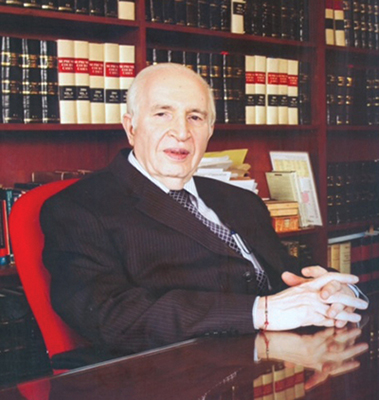
Tehmtan Andhyarujina: reputation for rectitude
At the memorial meeting organized by the Delhi Parsi Anjuman
Tehmtan signing as witness at Azmy Birdi’s wedding
Andhyarujina family on Rustomji’s 93rd birthday
Since moving his practice to Delhi in the mid-1990s (after being appointed solicitor-general), Andhyarujina was a notable presence in the Supreme Court of India (SC). His reputation for rectitude, his capacity for hard work, and his affable manner made him quite popular with the judges. He was called upon numerous times to act as amicus curiae (friend of the court), including in the case involving Aruna Shanbag, the Bombay nurse who had been sodomized and who lay in a vegetative state for many years — a case in which the SC was faced with difficult questions concerning the legality of euthanasia. Andhyarujina also handled many landmark commercial cases, including the politically-sensitive attempted takeover of Escorts Limited by Swraj Paul, in the 1980s and the more recent Novartis litigation concerning the "evergreening” of patents. He was particularly sought after as an expert on inter-state water disputes, and played an important role in the commissions set up to resolve rival claims involving the Narmada, Cauvery and Krishna rivers.
Andhyarujina also gave freely of his time and his services whenever he was called upon to do so for public causes. An example of his willingness to help in this way was provided by member of parliament, Dr Subramanian Swamy, in a recent conversation with this author. When Swamy was charged with hate speech under controversial circumstances by a court in Assam and a warrant of arrest issued against him, Andhyarujina readily agreed to seek judicial intervention in having the execution of the warrant stayed. This he did with great tenacity — and in the face of considerable resistance from the judges — during a hearing in the SC which Swamy remembers with gratitude to this day. Andhyarujina’s skillful argument and passionate pleading, notes Swamy, saved him from near-certain incarceration on that occasion. This was all the more creditable because Andhyarujina did not, to the author’s knowledge, share any of Swamy’s political or ideological views.
In 1998 the Government of India invited Andhyarujina to chair a Committee on Banking Laws. This led to the passing of the Securitisation and Reconstruction of Financial Assets and Enforcement of Security Interest Act, 2002 (SARFAESI Act). He was also a member of the Task Force on the Committee on Centre-State Relations Review appointed by the Government in 2007. He had a strong commitment to public service — a quality that has become increasingly rare among successful members of the legal profession in recent years.
By the early 1980s, he had already begun making his mark as a solid exponent of constitutional and administrative law. A protégé of the redoubtable H. M. Seervai, Andhyarujina had played a supporting role in many of the leading constitutional battles of the 1960s and 1970s, including, notably, the Fundamental Rights case (Kesavananda Bharati vs State of Kerala) where he appeared alongside Seervai in a valiant but largely unsuccessful attempt to assert the supremacy of parliament. In 2011, based on private notes made during this landmark case, Andhyarujina published an illuminating book entitled The Kesavananda Bharati Case: The Untold Story of Struggle For Supremacy by Supreme Court and Parliament.
His unshakable adherence to the doctrine of parliamentary supremacy — subject to constitutional constraints in the case of India — made him a slightly lonely figure in those times and to stand out from the likes of Nani Palkhivala during the epic constitutional battles of the Indira Gandhi era. It is a testament to Andhyarujina’s sterling personal qualities that, despite the deep polarization that those skirmishes engendered, he was held in the highest esteem by Palkhivala (whose rather fractious relationship with Seervai became the subject of many stories). In his turn, Andhyarujina bore no ill will towards those who were passionate in their denunciation of the Seervai line of argument (it is a delicious irony, of course, that, in his later years, Seervai himself underwent a change of heart in relation to many of the issues that he had espoused with fervor up until the late 1970s).
Another issue on which Andhyarujina ploughed a somewhat lonely furrow — at least among many of his peers — was judicial activism. His principled stand against judges straying into territory that did not belong to them did not win him the applause of the liberal elite. Nor did it fetch him any of the glittering prizes that are reserved for those who are in the vanguard of activist politics. His arguments for judicial restraint were made with conviction, courtesy and clarity in the many newspaper articles he wrote over at least the past two decades. Some of those articles — and other writings which, though not marked by literary flourishes, exuded erudition of a high order — are likely to be republished in a book being lovingly put together by a young member of his chambers in Delhi.
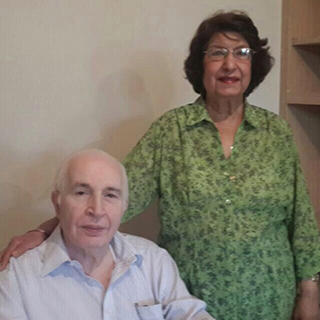
Tehmtan and Silloo Andhyarujina
It is worth noting that Andhyarujina’s disapproval of judicial activism did not signal an indifference to some of the injustices that were sought to be remedied through this controversial method of grievance redressal. Quite the contrary.
A matter that troubled him quite intensely towards the end of his life was what he perceived to be a precipitous decline in the stature of the SC. There were two broad aspects to his concern: firstly, the falling standards of the Court’s proceedings and output (which also implicates the decreasing intellectual quality of its judges) and, secondly, the runaway expansion in the role of the court (from what the founding fathers of the Constitution had envisaged as a constitutional court to an all-purpose court of appeal). For at least five years preceding his demise he lamented these developments with all the vigor he could muster.
As anyone who has known him will testify, Andhyarujina’s deep sense of compassion — and his genuine concern for the underdog — was legendary. It probably arose from his own humble origins — and from the even humbler origins of his parents on whom he doted. Like many people of his generation, he never wore his heart on his sleeve, but those who were at the receiving end of his kindnesses and generosity could not have failed to notice his essential humaneness.
Andhyarujina had demonstrated a high level of promise from his early years. He had completed his early education from Bombay Scottish School, graduation from St Xavier’s College, and law studies from Government Law College where he was awarded the Sir Charles Sergeant Scholarship and the Vishnu Dhurander Gold Medal by the University of Bombay. He started his legal practice in 1958 after forsaking a career in the Indian Foreign Service to which he had been selected shortly after completing his studies.
Andhyarujina took considerable interest in Parsi community matters. As well as serving as a director of the Zoroastrian Co-operative Bank Limited, he supported many worthy community causes including the Committee for Electoral Rights in 1980. In 2010 he joined other prominent Parsis such as Anu Aga and Dr Rustom Soonawala in supporting a legal challenge by Jamsheed Kanga and Homi Khusrokhan to the Bombay Parsi Punchayet ban on the liberal priests Ervads Khushroo Madon and Framroz Mirza who had been involved in conducting navjotes for children from mixed marriages.
His devotion to members of his family was palpable, and it must surely have been a matter of some comfort for Andhyarujina to know, as he bade farewell to this world, that son Zal was beginning to make his mark in a profession with which his family has had such intimate connections for at least three generations.
Sometime before his demise, Andhyarujina’s friends had begun asking him to step back from his practice and to embark on a writing career which would have enabled him to more constructively and more fully channel his ideas for the betterment of India’s crumbling legal system. At last, when, sadly, his recent illness compelled him to quit court work, Andhyarujina finally relented and agreed to devote some time to writing. Unfortunately, his illness took its toll and those plans had to be abandoned.
Andhyarujina leaves behind his widow Silloo, son Zal, daughter Zia Ashad Mehta, and sisters, Gool Bharucha, Nina Mody and Khorshed Javeri.
Memorial meet in Delhi
The Delhi Parsi Anjuman, of which Andhyarujina was a member for some two decades, organized a well-attended memorial meeting at which rich tributes were paid to him by friends and colleagues from the bench and bar in the afternoon of April 8, 2017.
"Let us celebrate Tehmtan’s life rather than mourn his death,” stated Fali Nariman whose home in Delhi was only a few hundred yards away from Andhyarujina’s. He chose a few, but good, friends, observed Nariman.
"Tehmtan’s articles were always thought provoking and I often engaged in debates as I was always on the other side. His commitment to his duties made me realize the righteousness of his character as a man,” commented Soli Sorabjee, adding, "I look forward to meeting Tehmtan in the afterlife and he will say ‘Soli, what are these judges doing these days?’”
"In a competitive bar where people quarrel for the sake of quarrelling, Tehmtan and I became good friends,” stated his friend of 60 years, Ashok Desai, commenting that Andhyarujina has left great standards for the bar to emulate.
Raju Ramachandran recalled how Andhyarujina had disagreed with an article that he had written but invited him for dinner and told him the reason for his disagreement. "As a friend he was genuine. Tehmtan for me was a model of plain living and high thinking. Tehmtan has left gold standards for the bar and his moral compass would remain with us for years,” reiterated Ramachandran.
Justice Dhananjaya Chandrachud regretted that he will have no further discussions with Tehmtan. When he had moved his practice from Delhi to Bombay and met the solicitor Jangoo Gagrat for advice on which senior to join, Jangoo recommended: "If you want to learn the law join Tehmtan’s chambers,” reminisced Chandrachud, sharing some incidents from his days as a junior to Andhyarujina which proved Andhyarujina as a remarkable mentor.
On behalf of the family, many of whom had travelled from Bombay for the occasion, Andhyarujina’s son Zal thanked the organizers and speakers for the eulogies.
Venkat Iyer, with inputs from Siddharth Sijoria
My Uncle Tehmtan
Tehmtan Uncle, as I always called him, was my mother’s younger brother. He was the middle child, the only son with two older sisters and two younger ones. His father, Rustomji Andhyarujina, was a well respected lawyer, an expert on the Rent Act on which he had written a book. His mother Freny was a homemaker and a woman with a very strong personality, especially remarkable since she had married at 16 and had her first child by the age of 17. Rustomji’s father being a priest in Udvada, they struggled to make ends meet for several years. So Tehmtan’s childhood was spent in relative poverty where fruit was a luxury and even a small apple had to be cut into portions to be distributed amongst the five of them.
Very few people know or ever knew that Tehmtan Uncle’s earliest ambition was to be an engineer. However, my grandfather talked him out of this on the basis that he would end up as a salaried employee rather than being self-employed, which was something that my grandfather felt was far better. Eventually three of his children became lawyers and the other two, doctors.
I have no idea if my uncle resented the fact that he had not been able to follow his dream profession but I personally think that his fine intellect, quiet humor, excellent command of the English language (with an in-depth knowledge of English literature) as well as a very calm, logical thought process enabled him not just to become an outstanding lawyer but also to enjoy the challenges brought by his career, making that difference to people’s lives, helping to ensure that good sense, reason, order and above all justice prevailed.
Both my grandparents made it explicitly clear that as the only brother it was Tehmtan Uncle’s duty and responsibility to look after all his sisters. My grandmother issued an edict barring her only son from matrimony till all four of his sisters were married.
Luckily, my uncle found his soul mate in a beautiful, elegant, cultured and gracious lady who became my Silloo Aunty. She did not come from a wealthy background but was highly educated, having graduated from Harvard and was very accomplished as a talented piano player. It was she who introduced my uncle to classical music, presenting him with Beethoven’s fifth symphony in the early years of their marriage. Silloo Aunty had a very good job as a director in Tata Textiles and she worked for many years till Tehmtan Uncle started getting busier and busier, travelling extensively. She then relinquished her position to focus on the home. My uncle loved entertaining, and my aunt is an excellent cook as is her daughter and my cousin Zia.
My uncle and aunt shared the good, solid values of honesty, hard work, respect for family and friends and eschewed a flashy, showy lifestyle. Tehmtan Uncle had very simple tastes. Even when he was at the peak of his career, there were no Rolex watches, no designer clothes, no BMWs or Mercedes. Not for him the fancy restaurants. Silloo Aunty recalls that when he was involved with the River Waters Disputes case he had to travel to New Delhi every Sunday night and came home on Friday evening. Invariably on his return when asked what he would like to eat, my uncle would ask for masoor daal (split red lentil).
Tehmtan Uncle and Silloo Aunty were both dog lovers. They had a dog called Copper (short for Copernicus, the famous astronomer) who they doted on. Sadly, after Copper died in 1993, they were so devastated that they did not replace him but they were surrogate carers for the dogs of their neighbors. When they moved from Bombay to New Delhi, they practically adopted a dog called Laila, who belonged to a neighbor. Laila was a regular presence in the Andhyarujina home in Hauz Khas, and when Tehmtan Uncle had his conferences she was always there in the study, curled up at his feet, known by her first name to all his clients.
Even after he moved to New Delhi in 1996 as solicitor-general of India, he continued to make regular visits to Bombay, for birthdays and family events, coming down at short notice on a number of occasions when his youngest sister Pervize Kavarana was hospitalized for pancreatic cancer. He was the sakshi (official witness in a Parsi wedding ceremony) for my wedding as well as for the nuptials of my other female cousins as well.
My uncle being the consummate professional, would never divulge details of his cases, jealously guarding client confidentiality. The one case, I do however remember was the 1986 one of fraud in the MD (Obstetrics & Gynecology) exams. I was in medical school then, so I followed the newspaper coverage closely. The hearing reached its climax after two days of intense drama: the gradual unravelling of the fraud as sealed examination records were opened and scrutinized accompanied by panic after a bomb hoax on the second day of the hearing emptied the courtroom within minutes. The judgement went against his client, the convener of exams who suffered great hardship as a result. When I got to know this person professionally, many years later, he told me that my uncle had fought the case for him without payment and following the judgment, the convenor had suffered a breakdown of his health, ending up in ICU; friends and family did not want to be associated with a disgraced doctor, but a regular visitor to check on him during his hospital stay was Tehmtan Uncle.
We shall ever remember him as a strong man, but a man who always stopped to be kind, often swerving from his path to show grace. Azmy Birdi