The tradition of assisting the Parsis of Navsari continues in the Jokhi family
An impressive array of jama clad priests graced the makeshift podium at Navsari’s Avan Baug on the morning of January 11, 2013. They were performing a jashan to commemorate the birth centenary of philanthropist Shapoorji Fakirji Jokhi as well as the 40th anniversary of the colony he envisioned and created.
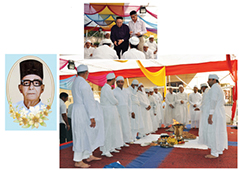
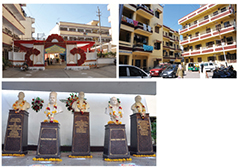
At an evening function the same day at the colony, Jokhi’s brother Keki, a co-partner in the firm of S. F. Jokhi and Company, commended the work done by the present trustees of the Avan Baug Charity Trust Fund naming relatives Jimmy and Coomi Jokhi amongst others who have done "Avan Baug ni kalji (care).” The other trustees of the 500-tenement colony located in the heart of Navsari fronting the Seth Shapoorji Jokhi Marg (Road) are Gujarat High Court Justice Jamshed Pardiwala, Shavaksha Jokhi, Noshir Sabawalla and Dara Deboo.
Keki released a 72-page booklet in English by author Marzban Giara titled Birth Centenary of Seth Shapoorji Fakirji Jokhi which narrates Shapoorji’s story from his birth on November 1, 1913 to his death on February 7, 1990 and contains several photographs as well as a genealogical chart of the Jokhi family. The booklet is partly translated from writer Rusi Besania’s Gujarati biography of Shapoorji titled Sakhavatnaa Shahenshah Shapoorji Fakirji Jokhi.
Sparse with his comments and businesslike, the soft-spoken Keki mentioned that the lack of a community hall in Avan Baug was being felt and stated "we will try in future” to build one. He requested the tenants of Avan Baug to bear some of the costs of maintaining the colony.
Pardiwala delivering the keynote address termed Navsari as a "tirthdham” (religious place). The Justice narrated how Shapoorji went to Hong Kong and through "hard work and God’s grace became a crorepati. He kept the flame of Navsari… burning... To live in the hearts and minds of those we leave behind is not to die.” He envisioned Avan Baug growing and "building similar baugs… One electric bulb cannot light another but one divo (lamp) can light thousands of others,” he remarked. He noted that Shapoorji’s brother Keki also "kept the flame burning.” The "youngsters of Avan Baug have benefitted from the goodwill” of their elders and now they in turn have to create "new goodwill … the residents have dreams. Aim high,” he urged the gathering. "Opportunities are plenty, but self-confidence is required. Ability takes you to the top but you need character to keep you there.”
Besania referred to Shapoorji as a "reincarnation of Sir Jamsetjee Jejeebhoy.” He noticed the similarities between the two, both having spent their childhoods in Navsari and being born in economically disadvantaged families. "Sir Jamsetjee’s wife’s name was Avabai whereas Seth Shapoorji’s mother’s name was Avanbai. Sir Jamsetjee’s father’s name was Jejeebhoy. Seth Shapoorji’s father was Jamshedji. Shapoorji’s grandmother’s children were not living. Hence, she gave the name Fakir to her son Jamshedji… By this logic, Shapoorji’s full name was not Shapoorji Fakirji Jokhi but Shapoorji Jamshedji Jokhi.”
Both studied till the fifth or sixth grade. Jamsetjee went to China when 21 years of age, Shapoorji departed for Hong Kong when 17. Noting that industrialist Jamsetji Tata was also from Navsari, Besania wished "may many more Jamsetjis be born in Avan Baug.”
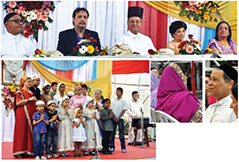
In a conversation with Shapoorji which Besania related in his biography, and recounted for the audience the philanthropist attributed his commercial success and inspiration to do charity to the Mount "Demavand sahebs. They have done it all, not I.” Mt Demavand is located in Iran and followers of the mystic school of Zoroastrianism, Ilm-e-Khshnoom, believe holy Zoroastrian magav sahebs (advanced souls) reside within.
Deboo mentioned that many of the Avan Baug residents came from 135 villages surrounding Navsari. They were disadvantaged and "from less educated parents.” But now Avan Baug boasts of people holding masters’ degrees and qualifying as chartered accountants, doctors, etc, having settled in Australia, New Zealand, UK, USA and other places. Residents have participated in the all-India Parsi cricket championships and achieved the runners-up position. "The raw material (the first residents) are now the finished goods (accomplished individuals),” Deboo remarked.
He bemoaned that many flats in Avan Baug were empty and locked. Residents were "not giving back the flats even though many (others) are on the waiting list.” Some residents though have bought ownership flats and left Avan Baug, returning the vacant flats to the trustees. According to Giara’s booklet, "20 to 25 flats fall vacant” each year on account of people moving to ownership flats elsewhere, deaths and shifts to infirmaries. Deboo spoke of the need to create a maintenance fund with contributions from the residents.
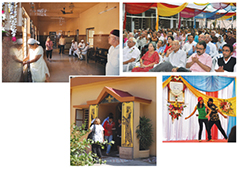
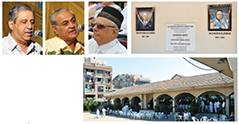
"Keki Jokhi spoke about a community hall. This will happen with his support,” said Deboo. Trustee Noshir Sabawalla announced that Rs 10 lakhs had been donated to the Avan Baug Trust to assist students pursuing academic excellence from the Shapoor F. Jokhi Charitable Foundation (SFJCF) founded by Keki.
The program started with songs, monajats and hips-swirling dances by Avan Baug youngsters and the presentation of shawls to Keki and others.
Following the function a dinner was held at the nearby Jamshed Baug grounds reconstructed by Keki around eight years ago in memory of Shapoorji and his wife Manijeh. The SFJCF has also donated money for the Shapoorji Fakirji Jokhi Memorial Wing at the B. D. Petit Parsee General Hospital, the Shapoorji Jokhi Wing on the second floor of the Hospital, the Shapoorji Fakirji Jokhi Agiary at Godrej Baug, the Dhunjishaw Fakirji Jokhi Building in memory of their brother at the Sett Rustomji Jeejeebhoy Gujarati High School (Shapoorji and Keki’s alma mater) and the Shapoorji Fakirji Jokhi Building at the Sir J. J. High School.
"From 1996 till today he (Keki) has repaired and renovated all the buildings at Avan Baug individually which included structural work, plumbing, painting,” states the booklet. He also concretized the colony roads and funded the solar concentrator at Navsari’s Doongerwadi amongst numerous other charities.
The silk and ivory trade
Born in a family of limited financial means, Shapoor was one of seven brothers, Faramroze, Pirojsha, Dhunjishaw, Sorabji, Nariman and Keki and six sisters Dinamai Dosabhai Sachinwalla, Ratamai Kaikhushru Italia, Sheramai Viraf Anklesaria, Nerges Burjor Chichgar, Gool and Jer.
An indifferent student, Shapoorji "left school after Std VI. Once he was asked, according to Besania’s biography, "Would not your life have been brighter had you acquired a college education?” He replied: "Yes! Perhaps if I was a graduate, I would have worked in a job like today’s Parsi youths! I would have spent my life living on a limited fixed income. I do not mean to say that one should not study in college. But is today’s education purposeful? Today one learns by rote. Where does education play a useful role in life? Education must widen one’s horizons in life. Can something that makes life narrow be termed as education?... Was our beloved Prophet Zarathushtra a graduate of any university?”
A regular at the gymnasium run by Ustad Jamshedji Kanga, a renowned physical culturist in Navsari, Shapoorji was urged by Kanga to go abroad and "earn name and fame.” He gave the 17-year-old lad a letter of recommendation for a job with Gotla and Company in Hong Kong. The ambitious youngster then moved on to the firm of Ruttonjee and Sons. After six years Shapoorji struck out on his own, placing his brother Dhunjishaw in his stead at Ruttonjee and Sons.
In 1937 Shapoorji started a partnership firm — Jokhi, Parekh and Company — with another Navsari youth, Keki P. Parekh, trading in silk saris with China, Africa, India, Bahrain, Dubai, Kuwait, etc. He added ghee, oil, spices and ivory from Africa to their list of items. In 1952 Shapoorji ventured into business independently, notes the booklet.
In 1953 Keki joined Shapoorji and Nariman in business. Nariman thereafter left the brothers and started his own business. The two remaining brothers set up S. F. Jokhi and Company. In need of more hands they called their nephews Parvez Faramroze Jokhi and Fakir Pirojsha Jokhi to help, with Keki eventually becoming a partner in the firm.
On November 1, 1944, Shapoorji’s 31st birthday, he was arrested by the Japanese occupiers of Hong Kong. His crime: he had assisted an English doctor who had been imprisoned by the Japanese during World War II with money to buy medicine. According to the booklet, Shapoorji was "tortured physically and mentally.” He was court-martialed by the superintendent of Stanley Jail in Hong Kong and sentenced to four years’ rigorous imprisonment. With the appointment of a new superintendent and a rehearing of the evidence, Shapoorji was set free after 11 months in captivity.
He married Manijeh Chichgar of Navsari in 1946 when he was 33. They had no children, but Besania notes they became godparents to "thousands of Parsis… giving shelter” at Avan Baug. Suffering from blood cancer, Manijeh died on May 31, 1985 in Hong Kong. "Her body was brought to Bombay by… a special aircraft and consigned to the dakhma.” When Shapoorji died of cardiac arrest 15 years later, his body was also flown down to Bombay and interred in the dakhma, stated Noshir Kasad, Keki’s brother-in-law.
A firm believer in dakhmenashini, Shapoorji "himself would act as a pallbearer in Hong Kong from the home till the aramgah… Sometimes the Hong Kong Parsis would say that instead of themselves carrying the corpse up to the aramgah, this should be entrusted to the Chinese (just as other people would get such acts done through the Chinese). But in the anjuman meeting, Shapoorji would oppose this thought. He would say that even on foreign soil, we should preserve as far as possible our ancient Parsi religious traditions,” states the write-up.
Shapoorji never cut his ties with Navsari. According to Besania, "one night the magav sahebs of Demavand hinted that he should create housing for the Parsis of his home town.” Shapoorji pondered: "Where do I have the pile of wealth to build houses for thousands of needy persons?” Determined to succeed, Shapoorji "decided to buy the land. I had that much money.” With the support of two brothers and other well-wishers including Firoz Buhariwalla (former mayor of Navsari), Nariman Wandrewalla, Rustomji Bharda and Tehmuras Tamboli, Shapoorji acquired a tract of land "belonging to (a) Borkhadiwalla, opposite the S. T. (State Transport) Depot.” Subsequently he bought plots totaling 1,35,544 square feet. As Shapoorji profited from his silk and ivory trade he channeled money into constructing houses on the land.
Avan Baug was inaugurated by Surat Parsi Panchayat president Manek Gheyara on April 1, 1973. Initially seven buildings of four stories each comprising 76 flats consisting of two bedrooms and a kitchen were constructed in Old Avan Baug. Between 1981 and 1985, 12 additional buildings comprising 422 flats/chawls were built in the New Avan Baug. The flats are given out on leave and license basis at nominal rates.
"An atash dadgah was consecrated in memory of Avanbai and Fakirji Pestonji Jokhi on roz Bahman, mah Amardad 1351 Yazdegirdi,” December 25, 1981 notes the booklet.
"Due to the care and skill of Firoz Buhariwalla, we have installed light poles on internal roads of Avan Baug. We have given shops at low rates to 14 Parsi youths so that our youths would be attracted to go into business rather than doing fixed income jobs. Many youths have been given loans for rickshaws. Elderly ladies weave kustis for which we provide the wool. Avan Baug Welfare League conducts religious classes for children. Games, entertainment programs, religious tours, lectures by scholars, all these activities help to keep our precious Parsi Zoroastrian culture alive,” Shapoorji is quoted as having said.
In a letter dated December 25, 1985 addressed to "My dear coreligionists of Avan Baug,” Shapoorji wrote: "Thanks to the sahebdelans with whose blessings the creation of 500 flats of Avan Baug has been possible, I am happy to see that all you humdins live in Avan Baug. My heart overflows with joy seeing the Zoroastrian group happy. Please give respect to brother Firoz (Buhariwalla) who devoted his life to the construction of this Avan Baug and my trustees. I am grateful to you for the love you have showered on me and also my late wife Manijeh. Avan Baug has been created keeping this purpose and ideal before my eyes so that I could contribute to preserving the community…
"My prayer is such that may my dear humdins on the soil of Avan Baug prosper and may they produce scholars, donors, industrialists as per the tradition of Navsari.”