"Afzal Guru’s execution will remain the most callous death sentence carried out by the government of India," wrote Tehmtan Andhyarujina, senior advocate of the Supreme Court (SC) and former solicitor general of India in The Hindu on February 19, 2013.
Having been appointed amicus curiae by the SC "to consider the larger question of the execution of convicts after inordinate delay," in the course of his submissions Andhyarujina had referred in particular to the facts of the Guru case. The hearing was concluded on April 19, 2012, and judgment was reserved in the case, he mentions. As the government was fully aware that the legality of prolonged delay in the execution of convicts was pending consideration by the SC, it was incumbent on it to await the authoritative pronouncement by the apex court. Despite this the execution was carried out on February 9, 2013, Andhyarujina writes. The government "deliberately ignored the view of the SC and courts across the world that hanging a person after holding him in custody for years is inhuman."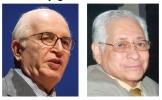
Accused as the mastermind of the attack on Parliament in 2001, the death sentence was pronounced on Guru on August 4, 2005. He appealed for clemency to the President of India on November 8, 2006. "During this period he and his family remained in agonizing suspense over his fate every day — a situation that is condemned by all civilized countries and our SC," Andhyarujina states. The rejection of his petition by the President after over six years, on February 3, 2013, was "kept secret and deliberately not communicated to his family," lest they file for further judicial consideration. The execution was carried out in secrecy within days of the rejection of his mercy petition, without informing his family or even leting them meet him one last time.He was buried in a grave inside Delhi’s Tihar Jail.
There was a political angle to this decision, Andhyurajina mentions, with the Bharatiya Janata Party’s demand for his execution, making it an issue for the ensuing elections. In response the ruling government chose not to decide the petition, deliberately delaying a response to the file sent to it. But with the execution of Ajmal Kasab, the Pakistani militant who participated in the November 26, 2008 terrorist attacks on Bombay, the opposition renewed its demand and Guru’s file was sent back to the President who formally rejected the petition. The letter sent by the government to intimate the family about the execution was received two days after the event.
Commenting on the ongoing controversy about the execution of Guru, Soli Sorabjee, legal luminary and former advocate general of India opined that the hanging was a logical conclusion after the mercy plea was rejected by the President. "India cannot be held to ransom by protests," he said on a CNN-IBN television program. However, "The manner of the execution, by hanging Afzal Guru without informing his family members and particularly before he could exercise his right of judicial review against the rejection of his mercy petition, was in violation of the basic norms of human dignity and of his constitutional rights," he told The Sunday Indian Express (February 24, 2013).