"The edge of extinction”
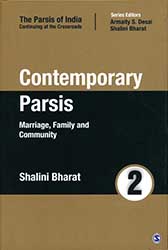
Contemporary Parsis: Marriage, Family and Community by Shalini Bharat. Volume 2 of the series The Parsis of India: Continuing at the Crossroads by Armaity S. Desai and Bharat. Published in 2017 by SAGE Publications India Private Limited, B1/I-1 Mohan Cooperative Industrial Area, Mathura Road, New Delhi 110044; website: www.sagepub.in. Pp: xlviii + 370. Price: Rs 9,900 (for the four volume set).
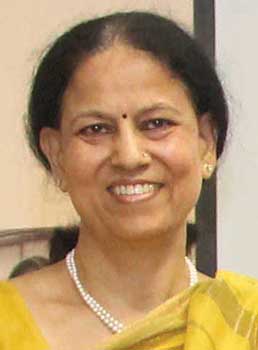
The constellation of factors underlying the Parsi demographic predicament, including singledom, delayed marriage, low marital fertility and a rejection of female intermarriage are well-known and have been often studied. However, as Shalini Bharat (pictured), the book’s author argues at its very beginning, the focus of much research on numbers alone has meant that the Parsi demographic decline and its determinants have not been studied sufficiently from what she terms a "cultural and socio-psychological perspective.” This is a gap that she greatly succeeds in addressing through painstaking research that forms the basis of this enquiry.
Using a mix of qualitative and quantitative methods, this second volume of the four-part series, The Parsis of India: Continuing at the Crossroads, provides an in-depth analysis of a range of themes around marriage, family and community that are key to our understanding of the Parsi demographic crisis. Taken together, the factors paint a comprehensive picture of what has led the Parsis to what the author describes as "the edge of extinction.”
The first chapter, "Parsis of India — Narratives of Change and Continuity,” sets the stage. In addition to summarizing the existent literature on Parsi demographic decline, it clearly identifies the gap in the literature that this volume seeks to address. It makes the case for the need to adopt an "emic” or insiders perspective and mixed methods research to better understand such issues as the community’s perception of its numerical decline, the meaning of marriage and the role of family in Parsi society, gender relations and attitudes towards solutions put forth for the community’s revival. While Chapter 2 focuses on the study design and methods, issues of housing and the role of Parsi charities, both of which are particularly pertinent in Bombay and Western India are the major themes of Chapter 3. An interesting observation here is that while trusts and their role is perceived largely favorably, nearly half the study respondents somewhat agreed that charities had made Parsis dependent. This is followed by a chapter on religion, culture and identity which explores the extent of religiosity in the community, the relative importance of religion vs ethnic identity, as well as national identification. While 59% of respondents regarded religion as very important to their lives, 38% regarded it as moderately important. Over 90% of respondents reported being proud of identifying as Parsi. Chapter 5, titled "Community Flashpoints: Debates and Dialogues,” covers a wide sweep of issues including demographic decline, intermarriage, dakhmenashini as well as community perceptions of baugs as opposed to cosmopolitan living arrangements.
Chapters 6 through 8 focus on various aspects of marriage, including the significance of marriage among Parsis, marriage patterns, decision-making around marriage, delayed and non-marriage, as well as intermarriage. Community attitudes towards the institution of the family as well as children are the focus of Chapter 9. The excellently written concluding chapter clearly spells out three "intertwining forces” — marriage and its practice, marital fertility and identity politics and their interaction that the author argues are key to understanding the Parsi demographic crisis. Community leaders, concerned at the Parsi demographic decline, would do well to examine the interaction of these intertwining forces, keeping in mind an important fact that comes across clearly in the book: the community appears to overwhelmingly view both marriage and fertility decisions as individual choices. Exhortations to early marriage and childbearing framed in terms of saving the community are for this reason likely to have limited appeal.
Reflecting on the book one cannot but fail to be struck by three puzzling areas where the mismatch between the Parsi self-image (as borne out by the study itself) and other findings emerge.
That the Parsis overwhelmingly see themselves as privileged and feel lucky to identify as Parsis is well-known and backed by the findings of this volume. In this, they are the archetypal "minority by will,” defined by professor of political science Jean Laponce as groups who see themselves as "powerful and resourceful, perceiving (themselves) exclusive, desiring recognition as a distinct group and usually not seek(ing) privileges.” In fact, the perception of the Parsis not seeking privileges in combination with that of their sharing their own resources through their charitable endeavors, has been key to the complete lack of animosity and resentment enjoyed by the community as a "favored” minority in India. In the face of this, the increasing clamor for reservations, as well as the somewhat more surprising, though by no means universal, resentment at the secular nature of some Parsi trusts is somewhat perplexing.
The second area of discordance is that between the Parsi self-image of a liberal community steeped in individualism and free choice, with the extent to which intermarried Parsis, particularly intermarried women and their children have been shunned by large sections of the community outside of a few liberal enclaves. The themes of individualism, free choice and gender equality among Parsis ring loud among quotes throughout the study. Study respondents across age groups greatly favor self-selection of life partners, oppose early marriage for women, favor women having their own careers and couples alone making fertility and child rearing decisions.
Yet, the study also vividly demonstrates the rejection and sense of hurt faced by intermarried couples, including several instances of what can only be termed as racist abuse. For women this is compounded by the ever present and cruel fear of not being able to be present for their parents’ last rites. The fact that the fear of community rejection has led to several Parsis, particularly women, not marrying at all is clearly indicative of the violation of their individual liberty and sense of self-fulfillment. This is clearly at odds with a community that identifies itself as one of India’s most liberal — particularly as regards gender equality.
The third area of conflict is that between the Parsi self-image as an educated and informed community, and the persistent, almost willful confusion of religion with ethnicity. References to the Parsi religion abound, conversion to Zoroastrianism is cited as a threat to the Parsi gene pool. The fact that almost all the major debates and controversies that face Parsi Zoroastrians are ethnic, rather than religious in basis is all the more surprising given that an overwhelming 79% of respondents mentioned the preservation of the religion as more important than the preservation of ethnicity.
This volume makes a significant contribution to the scholarship on Parsi demography. It goes beyond an examination of the community in Bombay, including not only Gujarat and the rest of Maharashtra, but also three other Indian metros. The breakdown of information along the dimensions of class and gender is a long overdue recognition of the diversity of lived experience within the community. Third, the study explicitly frames its findings within the larger national context of a globalized economy, characterized by rapid economic growth and social transformation.
The comprehensive nature of the study has led to some avoidable repetition. For instance, themes in the chapter on community flashpoints such as intermarriage are discussed elsewhere in the book; similarly there is a great deal of overlap between the determinants of late marriage and non-marriage that could have been presented together. There are also some minor errors that have crept in. For example, it is claimed that the percentage fall in Bombay’s Parsi population from 1872 to 1906 reflects a numerical decline, something that cannot be inferred without knowing the growth rate of the city as a whole. However, these minor negatives do little to detract from the extensive and painstaking research that underlies this volume or the findings that are central to our understanding of the existential demographic threat facing the Parsis of India.
ZUBIN SHROFF
Shroff is a medical doctor and health systems specialist. He holds a doctoral degree from the department of Global Health and Population at the Harvard School of Public Health.