A welfare center at Maroli in South
Gujarat stands testimony to Mithuben Petit’s dedication to the Gandhian way of life
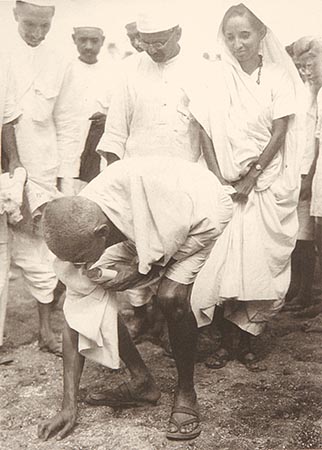
When Mohandas "Mahatma” Gandhi entered Surat district in 1930 to protest against the notorious salt tax levied by the colonial British government, Mithuben Petit welcomed him. She and freedom fighter Sarojini Naidu were alongside him when he picked up that first handful of salt. For her participation in the Dandi March, Petit was imprisoned for four months, along with Kasturba Gandhi, the Mahatma’s wife, and Maniben Patel, a freedom fighter and daughter of Sardar Vallabhbhai Patel, India’s first deputy prime minister.
Petit "was offered ‘A’ class facilities which she unhesitatingly, turned down,” noted Aban Petit in an article titled "A Personal Glimpse Into The Life Of Mithuben H. Petit” published in Realist and reprinted in Mithuben Petit ‘Maiji’ Abhinandan Granth. Aban is the wife of Mithuben’s nephew, Homa Petit. "During her imprisonment Mithuben busied herself caring for the ill and teaching sewing and knitting to the women who were there for anti-social crimes.” When they were released, the residents of Maroli in Surat district requested Kasturba and Mithuben to start an ashram. Well-wishers donated eight bighas (almost five acres) of land.
Gandhiji laid the foundation for the Kasturba Vanatshala Ashram (later renamed Kasturba Sevashram by Vallabhbhai) on June 21, 1931. He reportedly inquired of Mithuben: "You are from a wealthy family. But do you realize your responsibility?” To which she was said to have replied: "Yes, Bapu (father, the affectionate term Gandhi was addressed by his admirers)! I will stay at this Ashram till the end of my life and continue to render service… Hu ahij datavani chhu (I am going to be buried here).” So states a documentary on the working of the Ashram hosted on their website. Mithuben had then vowed solemnly to develop the Ashram till her death. She kept her promise. She served there in spite of her indifferent health; the poor of Surat and Bharuch districts became her family members. Her selfless work with the poor reportedly earned her the title of "Din Bhagini (one who helps the helpless)” from Vallabhbhai.
Within six months, the Ashram hummed with activities, note the tomes on Mithuben’s life and times. Nearly 50 persons from all classes, including Parsis, made it their home. This is when Mithuben began to be referred to in South Gujarat as "Maiji (mother).” Her reported knowledge of indigenous medicines aided the recovery of the village folk from seasonal as well as common ailments.
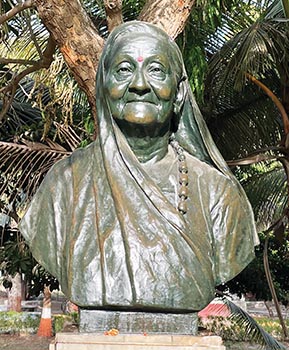
Top: Bronze bust of Mithuben Petit Photo: Rohinton Contractor;
above: Mahatma Gandhi picking up salt at Dandi, with Mithuben and others Photo: Wikipedia
Today the grounds of the Ashram adjacent to Maroli station (a 15-minute train ride from Navsari) are lush with greenery, coconut, chikoo and flowering trees and well laid out paths. The place is abuzz with activities related to education, healthcare and agriculture. Founded by Mithuben and Kalyan Mehta, and administered by her, her hand is visible in many of the units within the complex. It was here that Mithuben taught spinning, weaving, dairy farming and leather work to disadvantaged children, and a diploma course in sewing to make women self-sufficient.
The Ashram started four residential schools with classes from one to 10 at Maroli, and three others at nearby Kevdi, Chaswad and Ambawadi. Eight hundred students study free of cost in these schools, with boarding and lodging facilities, as well as clothing and medical assistance. Two hostels, one each for boys and girls, four dispensaries, a 15-bed mental hospital (at Maroli), a "hostel” for cows and two tailoring centers function as part of Sevashram. Repair of old buildings and construction of new buildings is in progress. The Mithuben Petit De-addiction Centre was started in 2013.
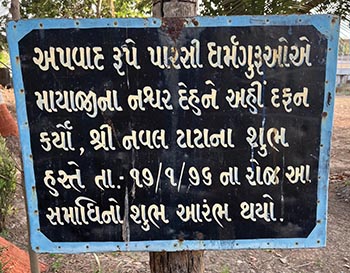
A bronze bust of Mithuben stands as a tribute to her life’s work. The administrators inform Parsiana that a marble statue is being sculpted in Jaipur and will be installed later this year. Her final resting place in the complex was inaugurated by industrialist Naval Tata in January 1976, three years after the Padma Shri awardee passed away in July 1973. She never went to Delhi to receive the award, Homa told Parsiana. She donated her award money to the Ashram.
Homa recalled "fuiji” (his father Dinshaw’s sister) as "saintly. You could sense the aura about her. When you met her you could sense she was a different kind of person.”
The nephew used to visit her at the Ashram during breaks from school and college. "It was a serene place. There was no ostentation. She lived a simple life. She would reside on the veranda of her home. When I inquired, ‘Fuiji why do you sleep here? Aren’t you frightened?’ she would reply, ‘Always be available to everybody.’ She believed people should have access to her at all times. Even when she visited the family in Bombay she slept on the balcony running around the front of (Dinshaw’s) flat.” While students, Homa and his sister, Freny "always looked forward to her company. The theplas she brought were world class. The first thing we would grab whenever she arrived was the tiffin” that contained the treat.
Along with Burjorji Bharucha, the Congress secretary, Mithuben spread the message of the virtues of khadi in Surat district. Some credit her as the dauntless spirit behind the Bardoli Satyagraha of 1928, where farmers indulged in civil disobedience to protest high farm taxes. It was she who helped the homeless agriculturists establish camps. "Her feverish patriotic zeal was so infectious that she sent for her younger brother Dinshaw, a law student at that time and (later) a solicitor of the Bombay High Court,” wrote Aban. "Her admiring brother arrived leading a team of young lawyers to the village of Bardoli only to be arrested by the police within a few hours of their arrival and sent back to Bombay, where they were later released. At this point Mithuben’s exasperated parents made every effort to bring their daughter back home. Once again… Mithuben paid no heed to them and carried on her work.”
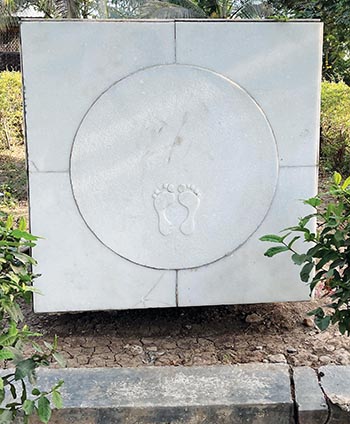
Mithuben’s samadhi inaugurated in 1976 by Naval Tata;
plaque noting interred as an exception
Inscription on Hormusji Petit Dardi Nivas Photos: Rohinton Contractor
In 1929 she also worked to provide food and shelter to the flood afflicted in Kheda district, notes columnist Meher Marfatia in an article "From silk to salt and satyagrah” about women freedom fighters in Sunday Times of August 19, 2007. Mithuben also opened a dispensary to deal with rain-spread diseases. A khadi spinning center and a girls’ school in Mandvi owe their establishment to Mithuben, as do permanent shelters for the promotion of education, health, agriculture and khadi in Chaswad.
The fractured family equation notwithstanding, on the death of her father Hormusji in 1939, Mithuben funded a hospital in Marol, The Hormusji Petit Dardi Nivas, and equipped it with an operation theater. Inaugurated in January 1942 by Dr Rajendra Prasad, who later became the President of India, the psychiatric treatment and rehabilitation center continue even to this day.
Emotionally ill persons from all over Gujarat and beyond were brought to this hospital for treatment and care. They were cured because they were cared for with tenderness, love and patience. Mithuben lived with these patients and their families. Her astonishing knowledge of indigenous medicines not only restored them to normal life but also provided cures for other Ashramites and villagers suffering from seasonal as well as other common diseases.
Fond of trees, gardens, flowers, water fountains, as also animals and birds, she reportedly stocked the Sevashram with cows, buffaloes, peacocks, peahens, pigeons, rabbits, dogs and cats, all friends of Maiji.
The tomes on her life credit Mithuben with considerable management skills. In perhaps a throwback to her family’s commercial acumen, she called craftsmen to Maroli to train residents of the ashram in producing fashionable dhotis, saris, towels, napkins, bed sheets, table cloths and curtains. She realized that mere production of khadi was insufficient to attract the wealthy and middle class.
"As a child she was a dreamer inclined to be quiet and home-loving,” wrote Aban. She abhorred frivolous parties and social gatherings. Many a time she took refuge from attending parties by subconsciously feigning sickness. Dinshaw, recalls with much humor that ‘Mithi always found a swelling in her abdomen which would obligingly manifest itself just before a party.’ Truth and simplicity were her ideals even as a child, and she laughingly recalls that many a time she was dubbed ‘St Peter’ by her friends. She received her secondary education at Jesus and Mary Convent in Bombay. In her youth, Mithi, as she was known to her family and friends, was an attractive and charming young lady, very conscious of her attire and her appearance. According to the societal norms of those days, she was never allowed to go out alone. An ayah would always be chaperoning her. She was an expert in the art of embroidery and in her mid-20s had even opened an institution for the working women in sewing, printing and dyeing.”
Born in April 1892 to Hormusji and Pirojbai Petit, Mithu was their eldest child. Her siblings were Cowas and Dinshaw. It is likely she was inspired by the ideals of her maternal aunt and uncle, Jaiji and Jehangir Petit who founded The B. D. Petit Parsee General Hospital (PGH) and the J. N. Petit Library; Homa is president and Aban vice president of PGH. Both Jaiji and Jehangir were attracted to Gandhi’s ideals. "When Gandhiji returned to India Mithuben’s aunt and uncle hosted a party to felicitate him on the spacious grounds of Mount Petit at Peddar Road, Bombay,” wrote Aban. "It was at this gathering that Mithuben first met Bapuji and was so impressed by his personality and stark simplicity, that she decided she must follow the Gandhian path.” When the Mahatma founded the Rashtriya Stree Sabha in 1921, its secretary was Jaiji and Mithuben was the manager. The books Mithuben Petit – ‘Maiji’ Abhinandan Granth and Smruti Sugandh compiled by Ishwarlal Desai and published by Sevashram provide glimpses of her life of service, as does a video on the Ashram website.
Reportedly, when the question of property arose, Mithuben is said to have told her elders: "It is your business to sit with the government and mine to remain with the nation. You are loyal to the British Government. I am loyal to Gandhibapu… I have no need for property.”
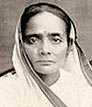
Kasturba Gandhi Photo: Wikipedia
Kasturba Sevashram Photo: Rohinton Contractor
Mahatma Gandhi, Mithuben and Sarojini Naidu at Dandi Photo: Wikipedia
The colonial government often brought pressure on the Petit family to recall Mithuben from the freedom movement. But she did not succumb to their pleadings. "Her mother wrote strongly worded letters to Gandhiji and Sardar Vallabhbhai stressing that her daughter had no place in politics and must return home,” wrote Aban. "Nothing affected Mithuben, she burnt all her imported clothes and took to wearing a coarse khadi sari and eating only a strictly vegetarian diet.” She sold her ornaments to support her causes.
"The Mahatma was so impressed by her dedication and hard work that he entrusted her and his wife Kasturba with a task fit for men — boycott of shops selling liquor and foreign goods,” noted Aban. "Gandhiji’s foresight in selecting them was however so uncannily accurate that in a short time the majority of the shopkeepers submitted to their dictat. At this point Mithuben, a staunch nationalist, was strongly admonished by the members of her community for ruining a popular and thriving business in toddy and liquor. Since a number of Parsis were engaged in this trade, they were furious and Mithuben received many threatening letters and telephone calls to desist from her ‘nefarious’ practice. Her family begged her to come home but Mithuben stood up to all the pleas and abuses and regardless of consequences faithfully carried out what she felt to be her duties to her countrymen.”
Maiji would sing poet Karsandas Manek’s lines: "Bhukya kaajé bhojan banjo, tarrsya nu jal thaajo, din dukya na aasu lota antar kadi na dharrajo, maru jeevan anjali thaajo (Be the food for the hungry, be the water for the thirsty, do not tire of wiping the tears of the needy, may my life be useful to others)” notes the voice-over in a documentary on the Ashram, while the camera pans to the minimalist home she spent her last days in.
At her funeral Surat Parsi Panchayat president Maneck Gyara and the trustees served as pallbearers carrying her body to the grave, stated Homa. Rain poured down, he recalled, "It was as if the heavens opened up to welcome her.”
With inputs by Marzban Giara and Farrokh Jijina.