A. F. S. Talyarkhan’s commentary and columns had an inimitable charm
Dr Hirji Adenwalla
Many older Parsis would remember the debonair A. F. S. (Ardeshir Furdonji Sohrabji) Talyarkhan (1897-1990). He drove a red sports model MG, was a celebrated cricket commentator and wrote a weekly column ending with the words, "Do you get me Steve?” AFST was affectionately called "Bobby.” He would often drive to the Marine Drive sea face and us college playing cricketers would make it a point to look sharp on the field. Word would go round: "Bobby is watching.” To be mentioned in his column was a big thing,
In an article in The Hindu of August 5, 1990 titled "The Loss of a Warrior” poet Dom Moraes said of him, "He was one of the most vital men I ever knew.” Bobby once said to me he was the son of a rich Parsi family but was not much approved of by his elders because of his wastrel ways. "I studied in England, not very successfully. When I returned in the 1920s I took to horse racing and lost large sums of money, to the horror of my relatives. I then placated my relatives, at least partially, by becoming an auctioneer of race horses for a fee.”
Moraes notes, "When the 1930s arrived, so did Bobby. He found what may have been his true métier as a radio commentator on every possible sport, but specially cricket. He became famous because of his commentaries on the Pentangular matches. When England played India in Bombay he made an editorial decision, eccentric and brave. He appointed me, a 14-year-old boy, cricket correspondent for his newspaper. In a T-shirt and shorts I sat with a typewriter borrowed from my father in the Press box of the Brabourne Stadium amongst hardened correspondents, some of them British, who would stare at me. Only a Bobby would and could do that.
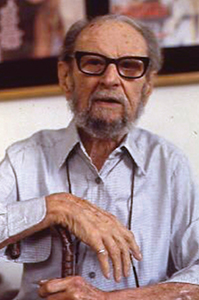
Bobby Talyarkhan: "A vital man"
"I remember Bobby in his 50s. He was ageless, a small man, extremely well dressed, who wore only silk shirts and cravats, drove fast cars, was often seen with pretty women. He romped around Bombay like a delighted schoolboy covering every major sports event either as a commentator or as a writer.”
Which Parsi of my vintage did not love cricket and the feverish excitement of those Presidency and Pentangular matches? If we could not afford a ticket we would skip school to hear Talyarkhan’s commentary on the radio. Many preferred to hear him than see the actual match, such was the charm of this man’s commentary.
He had "a fine command of English, a polished public speaking style and an ability to create dramatic interest in the game,” wrote Richard Cashman in Patrons, Players and the Crowd: The Phenomenon of Indian Cricket. He disliked sharing the microphone and did the commentaries all alone throughout the day. Ramachandra Guha writes, in A Corner of a Foreign Field that he "brought to cricket broadcasting a rich, fruity voice and a fund of anecdotes. He was ambitious and opinionated, with a voice that was ‘beer-soaked, cigarette-stained.’ His self-control was superhuman, for he would speak without interruptions, except for lunch and tea.”
As stated on Wikipedia AFST’s "career with the All India Radio (AIR) ended with the series against West Indies in 1948-49. AIR insisted on having a team of three commentators, with which Talyarkhan disagreed. The only time he shared the mike was when India made its first tour of Pakistan in 1954-55. He made a brief reappearance in 1972-73 when he presented the close of play summaries.”
I quote from one of his articles which I found in my old scrapbook. "There were two great spin bowlers of those great days. One was a Parsi by the name of Jamshedji or Jamsu as the Parsi boys affectionately called him. He was five feet and two inches in height and he was very, very fat. Parsi boys called him Peti nu Pau (stomach of bread). Ah! For variation of flight and spin, every ball was different, probing to find the batsman’s weakness and then only when he had got the measure of the man, he would go in for the kill. Jamshedji could never pick the ball from the ground. He would gently push the ball with his toe to the mid-off, who would pick up the ball and throw it to him. After he finished his stint of bowling he would go and stand at long off near the boundary line or when the change took place he would be at deep fine leg. If a ball came to him he fielded it and the crowd would roar in appreciation. No one ever saw Jamshedji run for a ball. The great C. K. Naidu said, ‘I fear that man. He has the devil in his fingers.’”
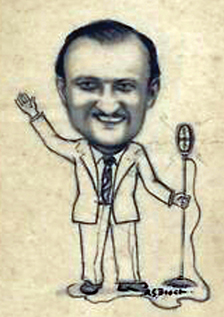
About Palvankar Baloo, AFST was far more eloquent: "Baloo is dead and we will see him no more, but I have boyhood memories of watching Baloo bowl. The gloss is off the ball, the batsmen are well set and scoring round the wicket. The skipper throws the ball to a flannel dressed player, a quiet unassuming sort of chap, looking the least deadly of all in the field. But a ripple of cheering would spontaneously break forth from the tents, because that was the signal for things to happen. One can see Baloo even now remove his green cap, that short easy careless run to the wicket, that very facile delivery as the left arm comes over, always the ballooned cuff of his flannel shirt dangling at the wrist, a thrust of the head as the ball left his hand... Baloo then stares at the batsman as if to fathom his mind. I can see him in my mind’s eye jogging in to bowl the next ball. Behind him the picture of a packed Bombay Gym, the grass ever so green.
"I see again that dangling shirt cuff, the follow through and always that little thrust of the head as if the brain had also followed through with the ball in between the pads and the bat to just lift the leg side bail, just the leg side bail, the wicket undisturbed and the roar from the crowd. Baloo looking unconcerned, as if nothing had happened. He had done what was expected of him. That is the Palvankar Baloo that I remember and can never forget.”
And also the AFST I recall.