Dr Firdaus Gandavia’s review of Berjis Desai’s Towers of Silence (Books, Parsiana, March 7-20, 2022) left me rather pensive and bewildered. This was just after I had finished reading the book and felt truly gratified with it. In a way, I felt fortunate because it would probably have deterred me from engaging with it, had I happened to read the review beforehand. While that is not how it’s supposed to be, unfortunately we all have finite time on our hands and therefore quite a few of us do lay some store by a book review which predisposes us in our decision to either pick up the book in question, or not.
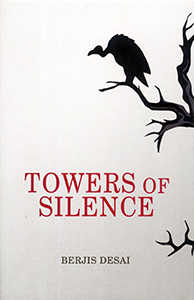 As discerning readers already know, reviews are subjective beasts, so this is certainly not to quibble with Gandavia on what his sentiments on the subject may be. I am merely writing to register my unequivocal disagreement with it because of the way I felt invested in the book, just so readers of your magazine can feel free to arrive at their own conclusions.
One of the central tenets of his criticism is the back and forth narrative structure, which is deemed to be "confusing” for the reader. But as any reader of literary fiction would know, such a structure is totally par for the course in most novels throughout time. In fact, the warp and weft of a story is a critical aspect of a narrative’s pacing so long as it does not become overly complex, which in this case to me, seemed a far cry. The backstories are beautifully etched out and as a reader you feel completely in the moment at every step of the way. In fact, it is the richness of these backstories that justify the present day narrative, and if any of those bits were to be sacrificed at the altar of smart "editing,” I fear the whole wouldn’t quite hold up. On my part, I found the book an absolutely dazzling, page-turning accomplishment that builds itself up to a heady climax in the tradition of the finest pulp novels while deftly playing with language, pacing and narrative structure to mark the rise of a fresh and stirring voice in literary fiction.
The reviewer’s exasperation with the details of the Doongerwadi ceremony, the nirang or the varasyaji is puzzling for two reasons. Spiritual dominions and theological arguments form the very bedrock of this book and part of the fun is in going along with the rollicking ride this offers. Secondly, this book deals with protagonists whose faith is not so well-known outside the city of Bombay and any good author must have the dexterity to navigate his subject matter in a way that appeals to a wider cross-section of the audience. I dare suggest that those exact segments, which may perhaps tire the community reader, may work like a charm for those outside our community. When a reviewer says, "The novel is infiltrated by ghosts and supernatural beings,” it speaks less about the book and more about his belief system, which may be right in its place but ends up questioning the aesthetic of the plot itself; not in itself a reviewing crime, but has the possibility of leaving the reader confused as to where the real issue is. This is a book about mysticism, occult and astral realms, but at its heart this is a tender love story whose strength lies in juxtaposing the material world alongside the mystical with a dexterous amalgam of philosophy and imagery. It is to Desai’s immense credit that we discern no false notes in the narrative either as doubters or believers, despite the wholly arcane subject matter.
I do feel strongly about one aspect though and may I submit this in all humility, for I hope that this does not come across as some sort of a primer on book reviews (which I am truly a nobody to expound upon). Whatever be the aesthetic of the reviewer, what’s not kosher is giving away too much of the plot in a review. It’s akin to a moviegoer’s dread of watching spoilers before the show and one wished for a bit of restraint in that department.
To be fair, Gandavia has been unstinted in his praise of Desai’s style of prose and his "powers of observation,” which in itself should be reason enough for any interested reader to deep dive in this heartfelt piece of work. Devoted readers of his non-fiction have already known of the author as a delightful chronicler of all things Parsi, but with Towers of Silence he ups the ante and weaves a tale fantastical, yet gripping, to elevate the mysteries of the occult in a manner never done before. Through a tale spanning generations, continents, and (no, don’t snigger) astral realms, Towers becomes a rare memorable saga entirely on account of the masterful control Desai brings to his material; not just in the way it packs in oodles of history, culture and the more disagreeable aspects of the community’s past, but even more so in its exceptional command over obscure Zoroastrian theology that could have been laughed out comprehensively were a lesser writer to attempt half the story.
In sum I found this novel a sublime epic that ends up moving the reader profoundly, for at its core it’s as much about a universal conception of transcendental brotherhood as it is about a cloistered group of adherents for whom the discovery of the divine is just another dimension of consciousness. It’s a triumph of a richly textured imagination that may just about succeed in making a believer out of the most hard-nosed skeptic.
To reiterate, the only reason I share my interpretation of Towers is because I felt compelled to give the Parsiana reader both sides of the story, and not as a takedown of Gandavia’s point of view that I always read with a lot of interest.
VISTASP SAM HODIWALA
vistasphodiwala@gmail.com
Dr Firdaus Gandavia responds:
Thank you for your careful and perceptive reading of my review and the trouble you have taken to reply. It is heartening to note that my reviews are being read even though our points of view may disagree.
The "central tenet” of my criticism is not so much the back and forth movement of the novel, though it was one of the criticisms I levied. I do agree this method was widely used in the early 20th century. But my feeling is that the shifts in time were too quick and occasionally not quite justified. This is what I felt made the structure unnecessarily complicated.
I do agree with your contention that the religious affairs of a small community like ours may need some explanation to the non-Parsi but I found that these were occasionally too long and seemed intrusive and took away from the narrative quality of the novel.
However, our main point of disagreement is that I feel Berjis Desai takes on too much in the novel. You also mention in your letter that it is a tale of the occult, a tender love story, a chronicler of "all things Parsi,” spanning generations and continents, history, culture, the disagreeable elements of the community’s past, obscure Zoroastrian theology… Don’t you think that this is too much for any novelist to handle in a single novel, let alone a first time one?
The strength of Desai, as we have seen in his books as well as his delightful column in Parsiana lies in his perceptive view of Parsi characters. I only wish he could have limited his canvas and concentrated on his strengths. After all, Towers of Silence is a novel, and the skills required are quite a different matter.
I hope that I have not given away too much of the plot in my review. I tried to include only those events which I required to justify my point of view.
Many thanks again for your careful reading of my review and your comments thereon, and above all the polite and constructive tone of the letter.