How Calcutta residents acquired a taste for Parsi food
Text and Photos Jaimin Rajani
While the soundscape of the central Calcutta neighborhoods of Dharmatala and Calcutta 16 keeps amplifying, there’s no "jamva chalo ji (come, let’s eat)” in it for the city of joy, other than the swanky, upscale newcomer in a south Calcutta mall serving banqueting bawa dishes.
A city where gluttony is a virtue, Calcutta might have been dropping colonial names of thoroughfares to incorporate patriotism in its addresses, but has no qualms in unapologetically devouring its beloved fish fry and dimer devil (deviled eggs) with kasundi (mustard sauce) — food items that have seeped into Bengal’s palate so much that they are now ubiquitous and deemed local. Despite the "live to eat” attitude, Calcutta had nearly no takers for dhansak (the acid test of Parsi food) amongst its indigenous population, until Meher and Dara Hansotia migrated from Ahmedabad to take charge of the management and kitchen operations at the Manackjee Rustomjee Parsi Dharamshala (a community guest house), adjacent to the famous Bow Barracks.
The Hansotias, an elderly couple that ran the Dharamshala for about eight years, dished up arguably the most delectable Parsi fare that the majority of the city had never even heard of, filling up a void in Calcutta’s culinary cosmopolitanism. Their special cutlets (made from cheese, chicken and eggs), their chicken akuri (a spicy scrambled egg preparation), patra ni machhi (fish in chilli-coriander chutney wrapped in banana leaves) and lagan nu custard (a dessert from the Parsi wedding kitchen) paired with their world-class hospitality left their patrons overwhelmed and in love with the exotic experience of eating a lavish bhonu (Parsi meal) at a 113-year-old heritage property in central Calcutta.
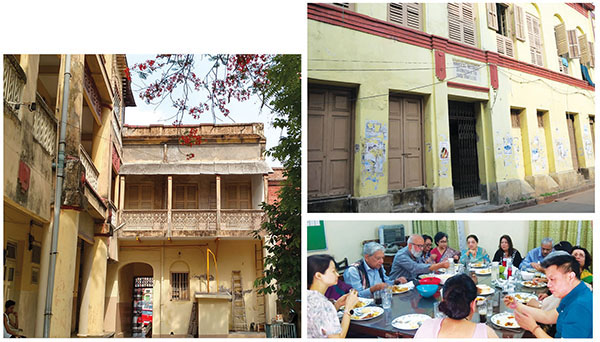
Clockwise from above: Views of Calcutta’s Manackjee Rustomjee Parsi
Dharamshala; feasting on Parsi fare at the Dharamshala
For a price sensitive city like Calcutta, the fact that this did not burn a hole in the pocket, made visitors pledge allegiance to their kitchen. I, for one, would never give up my patronage with them for any fancy, air-conditioned restaurant. Not to say that this wasn’t fancy. An Indian metropolis that had been deprived of Irani cafes and Parsi flavors for so long, Calcutta could finally say, "If Bombay’s got Jimmy Boy and Britannia, we’ve got the Hansotias.”
I got acquainted and eventually familiarized with the Parsi cuisine, owing to my birth and upbringing in south Bombay’s Dhobi Talao area that houses several Irani cafes and Parsi eateries such as Kyani and Company, Sassanian, Sunshine Bakery, Parsi Dairy Farm, to name a few, sandwiched between Marine Lines and Charni Road. Even during my college days in Poona, it was a religious weekly ritual to eat at Dorabjee’s Restaurant in Sharbatwala Chowk and bun maska chai at 4 a.m. at Kohinoor (on Mahatma Gandhi Road). Upon resuming my Calcutta residency in 2018, I immediately took to the Calcutta Parsi Dharamshala’s kitchen to carry forward my love affair with Parsi food. That’s where I made my acquaintance with the Hansotias.
However, it wasn’t all hunky dory for them. Initially, there were no bookings or customers whatsoever. During the pandemic lockdown, Dara ran from pillar to post to ensure timely delivery of food and basic amenities to the elderly residents of the Dharamshala and those who had opted for their tiffin service, like Cyrus Tata who’s nearing 70 and lives alone in his Dharmatala apartment. Unfortunately, after eight years in service, the Hansotias decided to resign and return to Ahmedabad as a result of some differences with the trustees.
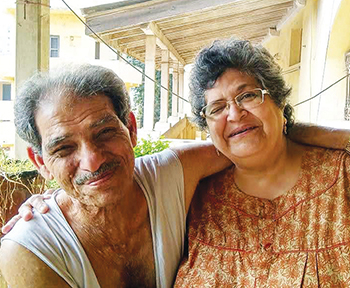
Dara and Meher Hansotia; below: a selection of dishes catered by them
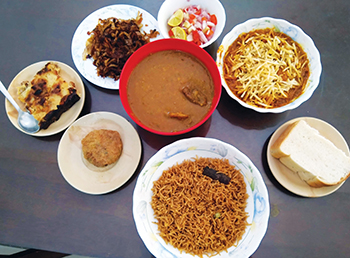
While the Dharamshala continues to serve Parsi food to visitors with pre-booked orders, there won’t be Meher instructing the Bengali guests to immerse the browned rice in dal (lentils) and not have it so dry, or Dara walking into the dining room to enthusiastically quiz the guests on all the vegetables that have gone into the dhansak, only to impatiently divulge the answer and reveal the "secret” ingredients.
During their stay in Calcutta, I saw the Hansotias fall more and more in love with each other. Their snowballing popularity that was accomplished through organic, word of mouth publicity, support from loyal customers and most importantly, hard work, resulted in the city acquiring a taste for Parsi food. Calcutta, that’s ostensibly been a preacher of inclusiveness and progressiveness, is now left with a receding Parsi population of about 400, one agiary (fire temple), a Parsee Club and the Dharamshala sans the warmth of the Hansotias as far as Parsi presence in the city goes. Calcutta’s culinary puzzle once again is left with some missing pieces, but sadly, there are only a few who care.
Recipe
Meher’s special cutlets are made of mashed boiled potatoes, grated boiled eggs, shredded boiled chicken, grated cheese, mustard powder, chopped green chillies, salt and pepper all mixed together and made into patties/balls. These are then coated with breadcrumbs, dipped in egg wash and fried in oil till golden brown.