It’s impossible to decide where to start describing Farida Variava, a member of the Delhi Parsi community and a trustee of the Delhi Parsi Anjuman (DPA) whose sudden passing away on the morning of November 28, 2018 left us shell-shocked.
Shelley Subawalla’s tribute, "Perhaps they are not stars, but rather openings in heaven, where the love of our lost ones pours through and shines down upon us… Today, sadly, another star takes its place in the sky above, looking down on us and twinkling just a little bit brighter than the rest... because that’s how she was: happy, vivacious, adorably wicked with eyes that constantly twinkled and a huge...oh so huge, heart!” aptly sums up the feelings of all those who had the privilege of knowing and interacting with her.
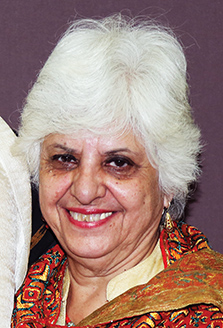
To find packaged within one human such an untiring zest for life, such varied talents and positive energy, such generosity of heart and fruitful involvement in many worthy causes sounds like a case of exaggerated adulation. But truly it is not so.
The second of four children born to Roshan and Pestonji Khajotia in Parda, a small town near Baroda, Variava spent her early years as a fun loving and mischievous youngster. She and her equally feisty brother Marzaban played many a naughty trick on unsuspecting adults. Variava’s daughter Hufrish recounts how the duo would step on people’s dhotis so the garment would come loose and cause them to trip. Variava was packed off to boarding school in the hope that she would sober down.
At the age of 21 she married Soli Variava of Delhi and they moved to Madras where they lived for some years. Farida’s varied interests were reflected in the diverse areas she worked in. She joined SPIC MACAY, the much acclaimed cultural organization which popularized Indian classical music and dance in India, as a secretary. She then worked at Figurette beauty salon and dabbled in some modelling for them as well. Variava had thick long hair which reached down to her knees. One day she came home with a short bob, shocking her father-in-law. Soli, of course, saw nothing wrong and happily supported his wife in all her actions, whimsical though they could be. She then turned to teaching and after completing a teachers’ training program from Delhi often served as substitute teacher for junior classes at Delhi’s Convent of Jesus and Mary where her two daughters, Monaz and Hufrish, studied. Later, she joined a toddler school called Scholars Academy started by her close friend Villie Aria.
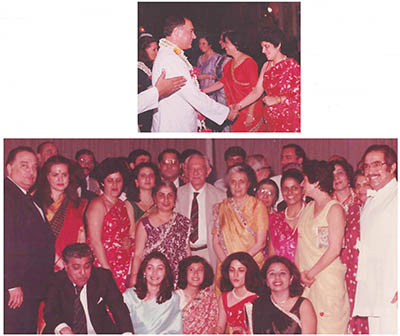
Farida Variava (top); greeting Rajiv Gandhi (center) and (above, standing, front row, 3rd from l)
with Sonia and Indira Gandhi (2nd and 7th from l) and DPA members
Cooking was in her genes and food her passion. Her parents being excellent cooks, the children inherited this talent. Her brother ran the Parsi Dharamshala in Baroda till he passed away and his wife continues to manage it. A fabulous cook, alongside her work commitments, Farida also did "dabba” catering for a few customers hankering for Parsi food. In Delhi, she sometimes catered for DPA programs as well as private parties, including Parsi weddings. It will be difficult to forget the snacks she would voluntarily bring to all our DPA board meetings: her orange cake, akuri on toast, ham and cheese sandwiches, mixed salads with exotic dressings — all "nakki (wholesome)” stuff, and enough in quantity to be later distributed to the serving staff of the Mengusi Dharamshala.
She embodied the true Zoroastrian spirit of love, compassion and charity but was marvelously egalitarian in her beliefs and activities which encompassed not only the truth revealed in her own faith but that of other faiths as well.
A great devotee of the "Devi,” the Goddess Durga of the Hindu religious tradition, each year during Navratri Farida observed nine days of fasting to cleanse her inner self. Her fast concluded with the feeding of young girls of the neighborhood with traditional cooked channa (chickpeas), puris (deep-fried savory) and halva (sweetmeat). Her daughter recollects how the whole family, including two trusted servants, husband, daughter and grandchildren would join her in soaking the kabuli channa the night before and kneading kilos of atta (flour) for the puris. The feast would be prepared early in the morning for the girls who were fed in a symbolic gesture of devotion to the Devi. But Farida would not stop there. She would also feed all the servants and service staff of their residential community.
She was introduced to Swami Chidvilasananda by her close friends Dadi and Nergish Mistry in 1988 and immediately Gurumai, the spiritual head of the ashram, became a huge part of her life. Farida rendered a great deal of service to the Siddha Yoga mission in Ganeshpuri. By then the family had moved to Bombay, closer to the ashram. As a trustee of the Shri Bhimeshawar Nityanand Trust at Ganeshpuri she took care of the day-to-day running of the sanstha (organization) and started an annual summer camp for local children. All meals were meticulously planned as were multiple activities for the physical and mental growth of the children, most of them from humble backgrounds. The summer school continues till date and hundreds of youngsters benefit from it. She also started computer and tutorial classes for them. Embroidery and sewing classes were organized for women to equip them with skills to earn a living.
On Farida and Soli’s return to Delhi, after a few years’ stay in Bombay, she was immediately absorbed into the management of the DPA. It was a period of transition at the Anjuman as a new order for running and managing the Dharamshala was being put in place. Professionalism and updated technology were inducted, the Dharamshala given a total facelift, catering entrusted to the popular Parsi establishment Rustom’s Parsi Bhonu, and a roadmap to stability created. As members of the Dharamshala and Aramgah Committee (DAC), Farida and other equally proficient and energetic ladies literally spent half their day in the Dharamshala, chalking out and implementing the strategy for modernization. Delhi is a place of vast distances and heavy traffic but Farida, living in distant Gurgaon, would cheerfully make the arduous journey to the DPA almost daily.
It was during this time that we witnessed Farida at her best. Those who interacted with her in managing the affairs of the Anjuman had interesting and amusing anecdotes which they recounted at the heart-warming and touching condolence meeting held at the DPA in December 2018 to commemorate her memory.
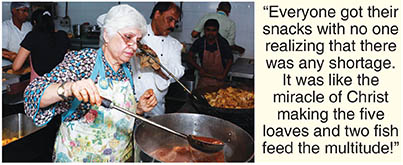
Dr Niloufer Shroff who organizes Parzor programs shared that she was aware of Farida’s culinary skills but did not really know her personally till she stepped in to help out at the book launch of Joyous Flame brought out by the Parzor Foundation in 2011. "We were expecting about a hundred people and had flown in Parsi snacks from RTI (Ratan Tata Industrial Institute) and had some home-made ones prepared at the India International Centre. The hall kept filling up and we realized we had about three times the number of people we had anticipated. We panicked, as we would cut a sorry figure if the food ran out. Farida remained cool. She and her friend Aria took over. She asked me to ensure that the flow of people to the tables would be from one hall door only and the duo cheerfully stood behind the counter handing out the food themselves. Everyone got their snacks with no one realizing that there was any shortage. To me it was like the miracle of Christ making the five loaves and two fish feed the multitude! For Farida it was just organizing and ensuring that the items were equitably shared by all.”
Top: Farida cooking for a function at the India International Centre;
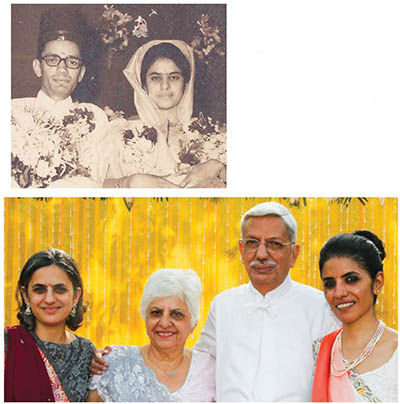
above: Farida and Soli on their wedding in January 1969;
with daughters Hoofrish (ext l) and Monaz
Though a fiercely independent person, Farida was a fantastic team player. Shroff, as chairman of the DAC, lamented nostalgically, "What a cohesive, loving team we were at the DAC. I can’t believe I can no longer pick up the phone and bounce an idea off her at any time of night or day. I cannot believe no one is going to say ‘Yes Boss’ as they answer the phone. No one was her boss and I was boss to none, but she insisted on that funny greeting even if she was going to disagree with whatever I suggested.”
That was Farida’s strength — the ability to disagree with anyone without fear. She often said, "If I don’t think something is right, I don’t care whose idea it is, and I will say no, even to my own father.”
Kaenaz Engineer, a co-organizer during Parzor’s Everlasting Flame Exhibition in 2016, recalled the "falooda episode.” On the inauguration day, March 21, at the Indira Gandhi National Centre for Arts, Farida had voluntarily brought falooda in a huge container for free distribution to all the guests. As Engineer and she were serving the falooda, they noticed one particular guest joining the queue again and again for more. It was awkward and embarrassing to say no to a guest. As Farida handed him his sixth glass, she gently but firmly said, "No more, young man, or you will be sick. However, if you really want one more please come at the end.” Only she had the guts to say this. With a wicked smile and gleaming eyes she winked and whispered, "He is our biggest compliment!” The guest did return, and true to her word she handed him the last glass of falooda!
Novy Kapadia, who was a young trustee of the DPA along with Farida, related an incident which illustrated her ability to manage awkward situations with charm and panache. Indira Gandhi, the then Prime Minister, along with her son Rajiv and his wife Sonia were guests at the DPA’s Navroz function in 1984. Everyone crowded around Indira and Rajiv. Farida noticed that Sonia was standing alone looking lost. Taking Kapadia by the hand, she went up to Sonia and began to discuss Italian food and football. Her knack of putting people at ease enabled the three of them to have a marvelous time that evening.
I recall a personal experience when she and I were sitting on the veranda of our hall on a hot July afternoon last year, sorting out muktad vases and bowls, etc left at the DPA by members long gone. Farida felt these should be polished and displayed inside the agiary and roped in most of the DPA staff to help. One of the workers soon walked in with a bag full of ice cream sticks and namkeen (savory snack) packets, courtesy Farida, and distributed the goodies to all the malis (gardeners), peons, sweepers and trustees present and all enjoyed a cool repast. So generous was her nature that only once did I find her getting angry — when someone called her "kanjoos (miser).” She told me she was so furious that she had to take her "jaan,” her endearment for her husband Soli, for a walk in the park to cool down.
We often wondered where she got her boundless energy and selfless caring, working for causes she believed in and for people who needed a helping hand. That she left us so suddenly, with no warning whatsoever devastated us.
Perhaps even God felt he could not run heaven without her.