Behnaz Khusrokhan Bhandare is now
performing the energetic Spanish dance
and its fusion with ballet and kathak
Mehroo Kotval
There was not a single vacant chair on the lawn of the Willingdon Sports Club (WSC) at the senior citizens event. Behnaz Khusrokhan Bhandare was performing the flamenco to showcase a fusion of flamenco-ballet and flamenco-kathak. On stage with the flamenco dancer that evening was Shivani Mistry, ballet teacher at Tushna Dallas’s The School of Classical Ballet and Western Dance. Radhika Joshi, student of the well-known Aditi Bhagat, and Samhita Radhakrishnan of the Beej School of Kathak were the other performers. Both flamenco and kathak have their origins in nomadic societies, both improvise during performances and use percussive footwork.
The danseuse says, "Flamenco was introduced to me only as a full-fledged adult at Denison University, Ohio. The school had a world-dance program.” Trained in ballet from the age of four, Bhandare was flamenco struck at age 20. She attributes her learning of "intricate, technical steps to Dallas (her ballet teacher) who introduced me to the style of ballet.” Bhandare majored in economics for her Bachelor of Arts with a minor in dance. Thanks to her ballet training, her foundation in arm and leg positions was already in place. "The balletic movements (ranging from positions one to five for arms and legs) helped me absorb flamenco which uses the same positions.”
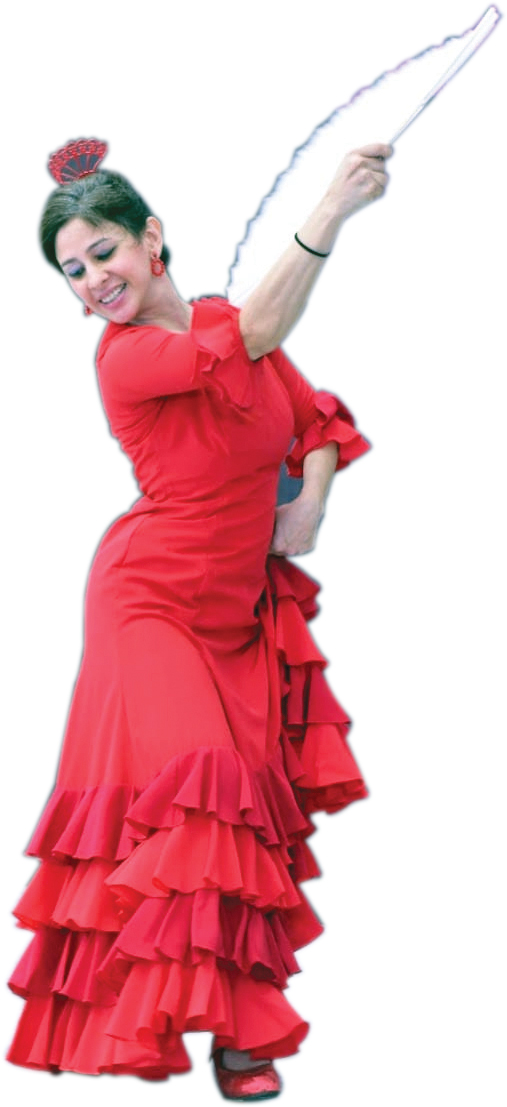
Behnaz Khusrokhan Bhandare
From l: Samhita Radhakrishnan, Bhandare, Shivani Mistry and Radhika Joshi
Flamboyant flamenco conjures visions of sinewy women clad in long colorful traje de flamenca (flamenco costumes) dancing with panache and insouciance as they cavort across the stage, clicking their heels, stomping, thumping. The economics graduate points out that while ballet has an airborne quality with leaps and twirls, flamenco is very earthy and grounded. "The difference in ballet versus flamenco is in the quality of the movements, in the way you enact it. Personality differences come from the soul,” she states. This is how dancers communicate their innermost emotions to the audience.
After a decade of motherhood, Bhandare is ready to don her dancing shoes again. Whilst on sabbatical, she had performed occasionally, slipping into her trajes costume made 15 years ago in Sevilla, Spain. She mentioned that she had danced in Bombay, at an event for the United Nations, three years at the Kala Ghoda Bombay Festival, Spanish night at the Bombay Gym, for the celebration of 45 years of the Women’s India Trust and now at the WSC. She intends to "continue with a ton of strangers.
Dancing and performing for the audience gives me a positive and natural high. Performing makes me happy.” While she was teaching kids before marriage, she "spent an entire flight (from New York to Bombay), visualizing choreography for all the dances I had learnt living as a dancer in New York.” She assures us that the size of the market to learn the dance is incredible in Bombay. Having trained in Sevilla and later in New York she has itchy feet ready to teach young children once again.
The young mother believes she can re-start her career as her daughter Tara’s formative years are done and she is already an independent girl. Strongly supported in Bombay by her husband Nikhil and parents Homi and Dhanoo Khusrokhan, she depends on Shehzeen Cassum for dance mentoring. Cassum now runs her own flamenco dance academy but the two were colleagues in Bhandare’s erstwhile company Ole! Flamenco. So far, these two seem to be the only two exponents of this dance form in culturally active Bombay. Bhandare is lacing up to kick off the new phase of her career with nails hammered into the heels and toes of her dancing shoes. She will then get into the rhythm of things, as audiences exclaim Olé! a traditional cheer for Spanish flamenco.