With the passing away of Dr Gieve Patel, 83, of cancer at the Cipla Palliative Care and Training Centre in Poona on November 3, 2023, we lost a doctor, artist, sculptor, poet and playwright.
When once asked how did he allocate his time to his multiple pursuits, he replied: "Since all these activities were important for me, I had to learn to manage time, to get the most out of each day, each hour. I also learnt to give my full attention to whatever I was doing at that particular moment and to clear everything else out of my mind.” Though a "Bombay boy” — he was born in this city on August 18, 1940, attended St Xavier’s High School and Grant Medical College and lived here for most of his life — during his childhood and his youth he often disappeared to South Gujarat where his grandfather owned about 300 acres of land in the Warli belt, a part of India that had a profound influence on him.
Dr Gieve Patel
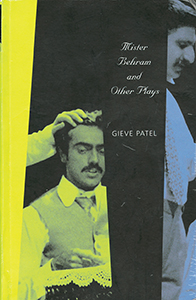
He chose this locale for two of his plays, Princes and Mister Behram. Whereas Princes is set "in a west coast Parsi village,” Mister Behram has as its backdrop a town in South Gujarat where Patel paints a particularly sympathetic picture of his protagonist, Naval, who is a Warli. Jerry Pinto, novelist, poet, journalist and translator, feels that "Mister Behram was the most powerful of Patel’s plays, and one is immediately struck with the relationship between the Parsi and the tribal, which is not seen from the outside. The most revelatory scene is how we colonize the tribal body which we see when Naval is made to strip to his loin cloth and push a cupboard.”
Though Patel was not influenced by Warli art, he has been very obsessed with the wells — both large and small — which have always formed a recurring motif in his work. The painting which immediately comes to mind is The Watertank at Nargol. This "is a result of my upbringing in South Gujarat where there are a number of wells… Anyone who peeps into a well first sees his own image reflected in the water… This stimulates another important process — that of looking into oneself.” However, though we can see the blue sky, trees and green leaves reflected in the water in his paintings, we rarely see his face, or a human face for that matter.
There are traces of Gujarat in some of his poems. In Grandfather, he expresses his grandparent’s inability to understand Patel’s affection for the Warlis who "are difficult, ungrateful /Double-faced, unreliable.” In contrast, in Servants Patel seems to sympathize with these individuals who have been forced to take up these jobs because they are "truant from an insufficient plot.”
Patel became a doctor because there were several medical practitioners in the family especially his maternal grandfather, who practiced in Nargol. Anand Thakore, poet and musician, acknowledges the debt of gratitude he owes Patel, not only as a close friend but also as a doctor who treated him when he was a fledgling poet as a young man of 25. "He put me on a very good treatment for my bronchitis which other doctors had not recommended and which is now commonly prescribed. He was a very pleasant and humane doctor. I often visited his simple and unostentatious clinic at Bombay Central. He was very patient and caring and perhaps I was the only person from the art world who had the benefit of Gieve’s medical advice.”
We see great sympathy for and understanding of his patients in his poem Post-Mortem Report (Child aged 4: Military T.B.) where he ruminates on the last few days of a little girl’s life. He wonders if there were any signs of what was happening and whether there was a "sense of withdrawal.” The bacillus is almost personified as an enemy invading every organ and the child dies two hours before the post-mortem is conducted. It is little wonder that when writer and translator Shanta Gokhale met Patel for the first time, she said in a private email, "I was not expecting a broadly smiling man. Nor a man with soft palms, which I discovered when we shook hands.”
However, Patel can be rather savage and one sees a side to him one does not generally associate with his work. In Post-Mortem he describes the process in macabre and graphic detail. The entire procedure is depicted in a manner which seems to diminish the dignity of the individual who is "swiftly sliced/ From chin to prick.” His bones which seem to be strong and protective are "snapped,” various organs examined only to: "Be dumped back into the body,
Now stitched to perfection, Before announcing death. Due to an obscure reason,” as he writes in his poem.
A similar use of disturbing and violent imagery can be seen in many of Patel’s poems, not merely those he has written as a "doctor.” Even in his best known and most widely anthologized poem, On Killing a Tree, the imagery is hard-hitting and almost medical. You can’t kill a tree with a single "jab of a knife,” one has to "hack and chop” and still "the bleeding bark will heal...” The root has to be "snapped out…pulled out entirely.” Poet and author Arundhathi Subramaniam, in her introduction to Patel’s Collected Poems, points out that "Patel’s poetic universe is one of nerve endings and viscera, ragged fiber and vein, gnarled root and ‘leprous hide,’ pervaded by overwhelming corporeal odors.”
We see the same ambivalence in Patel’s art. The works exhibited at the Galerie Mirchandani+Steinruecke in 2017 were the more mellow ones where his sensitivity and compassion for the human condition come through. In his paintings of old age and mourners, the figures of mourners are generally against a pale background, their faces expressive of pain and suffering. Even in a painting where the mourner’s face is hidden, the bent head resting on a hand conveys all that needs to be said. In Meditations on Old Age the brown framed spectacles on the face of a male subject and bright lipstick on the pale face of a lady render the works even more striking.
But several of Patel’s earlier paintings seem to be cruel and violent — like Crushed Head (1984), Crows (1999) which depicts four crows busily devouring their bloody prey, Battered Man in Landscape (1993) or Riot (1991) with a young man apparently enveloped in flames.
When this writer had asked about this streak of violence which emerges time and again in his poetry, drama and paintings, he replied, "Violence and cruelty are facts of life. It is one of the responsibilities of an artist not to evade this aspect of our living. In the Crows painting, I have tried to show the disgust one feels at the feeding habits of crows. But the paintings are also matter of fact depictions of reality and, hopefully, they are neither melodramatic nor exhibitionistic. Also, these paintings take a look at the ubiquity of death as is also the case in the series of heads, many which are depictions of victims of violence. In Drowned Woman, I have tried to use particular shades of colors to highlight the bloated and discolored skin of the subject.”
Clockwise from top: Cover of Patel’s Mister Behram and Other Plays; scenes from his plays
But he insisted that his work is also positive and uplifting. He was particularly fond of Peacock at Nariman Point, based on a report and photograph in The Times of India. In the painting we see a peacock held up against an office window with views of the Marine Drive bay and the highrises of Cuffe Parade. The bird had probably made its way from the Towers of Silence at Malabar Hill to Nariman Point during the night. Another work, called Near the Bus Stop, depicts an armless man sitting under a tree being fed by a little girl. "Once again, I’ve attempted to celebrate the ability of this young girl to fight against the vicissitudes of life.”
In 2006, gallerist Shalini Sawhney of the Guild Gallery told Patel that she would host a show of his sculptures. She made available to him a wonderful sculpture studio and a foundry in Jaipur where he could find every kind of technical assistance. "I worked on two themes, Eklavya and Daphne. Eklavya, the first tribal prince from the Mahabharata, cut off his thumb as a gift to his guru when he was asked for it. He loses any hope of becoming a supreme archer, his one and only dream. Daphne, from Greek mythology, is a forest nymph who endures being transformed into a tree to escape being raped by Apollo. After working with everyday human beings in my paintings, it was invigorating to turn to mythical figures,” he had then stated.
Patel was accompanied by Ranjit Hoskote, poet, art critic and cultural theorist who was keen to get a sense of his new foray into sculpture. At a memorial meeting at the Galerie Mirchandani+Steinruecke, organized by gallerist Ranjana Mirchandani, Hoskote said, "It was wonderful to see him interact with colleagues at the kiln, taking a close interest in the translation of his clay maquettes (preliminary models) into bronze sculptures, the questions of material and temperature, the patterns and unpredictabilities of the process, and so forth. He remained endlessly curious about the artistic process in all its forms, across media and materials.”
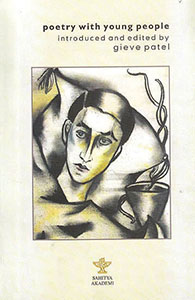
When Patel could not flee to the sanctuary of Sanjan and Nargol, he escaped to the Rishi Valley School in Andhra Pradesh where he conducted an annual three-week poetry workshop for students to expose them to great poems and provide them with a sense of their form and cadence. This resulted in Poetry With Young People, an anthology of 150 poems, introduced and edited by him.
Pinto remembers meeting Patel for the first time at Cusrow Baug for an article he was writing on Clearing House, a publishing cooperative set up by Patel with his contemporaries Adil Jussawalla, Arun Kolatkar and Arvind Krishna Mehrotra. "I accepted the offer of a cup of tea and was amazed at the surgical precision with which the tea was made: two teabags in a teapot, allowed to brew for exactly eight minutes. This was his greatest strength and weakness. He always aimed for perfection in whatever he did, and in several cases unfortunately the work was never really completed.” Pinto met him in the 1990s when Patel was translating the work of Akho, a 17th century Gujarati poet. He shared a few of these with Pinto, the ones he was satisfied with. He strove for such perfection in his translations and just a few of these were published along with his Collected Poems.
In fact, this trait was manifest in all his activities. Hoskote mentioned that Patel was so particular about achieving perfection that one afternoon he disturbed the nap of theater director and drama teacher Amal Allanaby a stomping noise on the terrace of Vithal Court where her father Ebrahim Alkazi had built a theater. "It was discovered to be Gieve, rehearsing for the role of the guard in Antigone.”
At the memorial meeting senior artist Sudhir Patwardhan commented about Patel’s sharp critical eye and demanding standards. "In 1989, Patel said that an essay on contemporary Indian art would include 18 painters and probably another 10 could be mentioned.” This severe standard was applied to his own work as well.
Mirchandani, who had probably curated his last major exhibition in Bombay at her gallery, said that one of Patel’s most important paintings was The Footboard Rider where the artist skilfully captures a man travelling on the footboard of one of our suburban trains. We see him through the bars of the window, his hair flying in the wind, looking at the passengers who are asleep and doleful as if they are in a prison. "And today,” she added, "I think, that maybe he is the footboard rider, free and unconfined, looking at all of us from the outside.”
The multitalented Patel is survived by his daughter Avan.
"What is a poem?”
This extract, reprinted from an earlier article in Mint Lounge, is about the annual poetry workshops Patel conducted for students at the Rishi Valley School.
Patel had a unique association with the students of the School started by J. Krishnamurti, philosopher, speaker, writer and spiritual guide at Rishi Valley, near the town of Madanapalle in Andhra Pradesh. As he describes in the introduction to the book, Poetry With Young People: "Rishi Valley School is a four-hour drive from Bangalore. It nestles in the shadow of a valley that suffers from being in the rain shadow of hills around it, with the result that in the earlier part of its existence the School was lodged in an impressive but arid setting. Planting of trees started in the 1930s, soon after the inauguration of the School itself. The result of this visionary activity is a transformed environment. The hills and the valley are full of trees, there are water bodies with birds and tiny animals wherever the rain gods have been reasonably generous, species of birds that had never been seen in the valley before have started to make it their home and the valley has been declared a bird sanctuary.”
The continuity of Patel’s visits allowed him to watch the children grow with the sessions. He first introduced them to some of the poets whose work he admired. He gave them a few basic rules — no clichés, no imitations, no references to daffodils, fairies, witches or goblins. Eventually, he suggested that the students read out their poems at the School assembly. "It was an uphill task nevertheless,” he says. "The average well-educated Indian student does not know how to speak at a public platform. The mercurial charming chatter with implosions of words and running together of text is a pleasure to hear on the games field or at picnics, but not elsewhere. In addition, the students at this stage of the workshop saw the reading as something painful to be quickly got over with. The idea was to rush through the poem and then run away.”
Gradually, however, the poets became as accomplished at reading their poems out aloud as at putting them on paper.
"What is a poem?” asked one of the children at the reading. "Is it meant to be read silently, or spoken out aloud?” In answering them, Patel was both teacher as well as fellow poet. "Well, it’s not prose. Poetry has a rhythm. Prose also has a rhythm, but it is different from that of poetry. Poetry catches a fleeting moment.”
Through the open window, a pale yellow butterfly shimmers into the hall for an instant, suggesting just how fleeting that moment might be. As he continues, he suggests that some poems are meant to be read in silence, so that one can go back to it again to reap its essence, but others are best heard out loud.
"You may not be able to get its full meaning, maybe you will just get 50% of it, but there’s a special pleasure in just listening to the sound of it,” he says.
Geeta Doctor