The Bombay Parsi Punchayet’s
new chairman shares his plans for the
future of the 351-year-old trust
Will the sudden and unexpected change in the chairpersonship of the Bombay Parsi Punchayet (BPP) on January 3, 2024 make a significant difference to the functioning of the 351-year-old trust? In order to determine what could transpire, Parsiana sent a list of questions on January 4 to the outgoing chairwoman Armaity Tirandaz and the incoming chairman Viraf Mehta to ascertain their views on the workings and future plans of the once premier body. We requested they respond by January 10 so we could inform readers of their views in our January 21-February 6 issue.
Mehta sent the answers on January 10 as requested but Tirandaz, who had suffered a fall on December 21, 2023 that resulted in a fracture of both her hips replied she had "been trying her best (but) I am not very physically comfortable to do so.”
In an undated email on social media groups she had earlier stated: "As you are aware I had a serious fall and shall not be able to physically attend the BPP for the next few weeks.” She intended to complete her term as a trustee but not hold the position of chairperson she said, and recommended the appointment of "the next senior most trustee Viraf Mehta as chairman of the BPP, in accordance with the scheme of election.
Top: Viraf Mehta (r) being felicitated by Aspi Sarkari while Percy Siganporia applauds;
above: felicitation from the staff as co-trustee Maharukh Noble (seated) applauds
"I have taken legal counsel and also spoken to (lawyer) Berjis Desai, who drafted the scheme, and they have on the same expressly stated that as per clause (51) of the BPP scheme of election, trustee Viraf Mehta would be next chairman unless all the other trustees (including myself) vote against him...
I look forward to the support of my board of trustees in my decision and in welcoming colleague trustee Viraf Mehta as our new chairman. Let us give him the strength and support that you have shown me.”
Clause 51 of the Scheme for the election of trustees of the funds and immoveable properties of the Parsee Punchayet of Bombay states: "Trustees shall designate the trustee senior most in office as the chairman who shall preside at all meetings of the trustees,” barring a disagreement which could necessitate an election.
In response to a WhatsApp message dated December 31 to Tirandaz from Parsiana expressing concern over the fall and wishing her well, the 79-year-old replied almost immediately: "I am tougher than you may think! I am raring to go but at present enforced rest till full recovery.”
Mehta may be the youngest person to occupy the chairmanship of the trust and possibly among the few whose father was also a chairman of the 351-year-old BPP. At some point of time the trusteeship had become almost a hereditary office till the Bombay High Court devised an election scheme in 1908 with the historic Parsi Punchayet case, better known as Petit vs Jeejeebhoy, presided over by Justices Dinshaw Davar and Frank Beaman. But as earlier records of the trust in all probability have not been preserved, or even kept, no one would know where they have been stored.
The Parsiana questions and answers received from Mehta are carried verbatim except for minor editing for stylistic purposes.
Parsiana (P): What do you see as the major challenges facing the Bombay Parsi Punchayet (BPP)?
Viraf Mehta (VM): Our number one priority is to improve the financial health of the BPP by generating funds. Apart from raising enough to cover costs, we need to restore all the commitments made to the community like second and third child subsidy, financial aid to our mobeds, etc.
P: How do you intend to handle the finances?
VM: We are currently working on six redevelopment projects, each of which will help the BPP generate ample funds for the medium and long term: Bai Mahal Building, Dhun Building, Cooper Building, Bharucha Baug, Dhunbai Wadi and the Godrej Baug ownership building.
We have another four projects in the pipeline: Palmlands at Contractor Baug, Goregaon Parsi Colony, Cusrow Baug ownership building and Panthaky Baug. The BPP owned Parsi Lying-In Hospital is also being actively considered for a makeover.
We are hopeful we will be able to monetize more than one of these in the near future. We are also working on a legal remedy in which revenue from all BPP colonies as well as the Wadia Baugs can be used towards the upliftment of the poor and needy of our community, especially Doongerwadi.
P: Will you be able to meet expenses? Will the subsidies to the priests and families having two or more children continue? Will the BPP be in a position to reimburse occupants the 50% cost of the repairs they are paying on the BPP’s behalf? How much of a backlog is there?
VM: Yes, once our projects begin to fructify we will be able to mitigate our current deficit.
P: When will the balance sheet for the financial year ending March 2023 be posted on the BPP website?
VM: This will be done shortly.
P: How will you raise money in the short-term to meet expenses? Long-term?
VM: At the moment the board is covering its expenses by rent, interest on deposits, auction of high value flats, settlement of legal cases and donations. Until some of the earlier mentioned projects are monetized, these are our main sources of revenue.
P: Will you build more housing or is the requirement not there?
VM: The current BPP waiting list is over 500. Plus many of our residents are living in congestion with four to five people residing in one room kitchen flats. At the moment we will need to construct more housing for the existing waiting list and to also offer larger flats to our beneficiaries, especially to the younger generation. Given our diminishing numbers, we need to encourage our youth to have large families of their own. A recent suggestion to construct flats through donors, like in the case of Godrej Baug, will also be considered.
P: What is the status on the case filed in the labor court by the Mumbai Mazdoor Sabha? How do you intend to resolve it? (The case pertains to non-payment of dues as specified in the agreement with the union.)
VM: The matter is sub judice. The community can be rest assured that we are working hard to settle the matter as soon as our financial condition improves.
P: Will you be raising the outgoings for tenants/licensees in the BPP colonies?
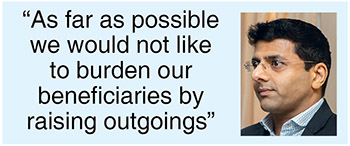
VM: As far as possible we would not like to burden our beneficiaries by raising outgoings.
P: What has been the response to the auctions held for BPP flats? Has it dropped, remained the same or increased?
VM: Recent auctions have seen a favorable response. Now, we are receiving inquiries in advance for available flats. We hope this trend continues.
P: In 2022, the percentage of interfaith marriages was 49% (85 Parsi to Parsi marriages and 82 Parsi to non Parsi). This percentage keeps increasing. How should the community and the trust react to this reality?
VM: The BPP is always striving to encourage couples to marry within the fold. Subsidized housing along with second and third child subsidies are amongst a few of the incentives.
Today the cost of real estate has skyrocketed. It has become very hard for young families to purchase their own home and, if they do, they are resorting to expensive mortgages which take 30 to 40 years to repay.
Living in a colony gives you the sense of Parsipanu. There can be no greater joy than growing up with your own. Parsi youth living in colonies tend to marry within the community. This is an undeniable fact. The inter-caste marriages are mainly of the youth who do not live in colonies and do not know the joys of living within the fold.
We will continue to work hard towards this goal of encouraging youth to marry within the community and once our financial health improves, we will look to new initiatives as well.
P: There is a perception that your decisions are influenced by your father’s (former BPP chairman Dinshaw Mehta) thinking and philosophy. How will you counter this impression?
VM: Everyone is entitled to their opinion. Those who know me and the way I work know the different styles and opinions we both have.
One has to remember that my father was a trustee of the BPP for 21 years and the chairman for seven of those years. His vast experience and knowledge is an asset for our community. There are times that I do reach out for his guidance as do so many other community members. At the end, my loyalties lie with the BPP and I will always stand by the trust first.
P: Will you be holding The Federation of the Parsi Zoroastrian Anjumans of India (FPZAI) meetings regularly, that is once or twice a year?
VM: Yes.
P: What do you see as the role of the FPZAI? Will you try and persuade the main anjumans in the various zones to attend the meetings? How will you get them back in the Federation?
VM: Most of the anjumans are in Gujarat and they do attend regularly. We will make an effort to convince the other anjumans to attend as well.
P: What do you see as the role of the BPP in the community in Bombay and elsewhere? The role of the Global Working Group?
VM: BPP is the apex trust of the community and will continue to be the apex trust. We will continue to be omnipresent for the poor and needy of our community and will strive to constantly aid those in need. Whether it be the Global Working Group or any other institution, we will be supportive as long as their welfare benefits the Parsi Irani Zoroastrians of India.
P: With Armaity Tirandaz and Xerxes Dastur unable to attend meetings how will the remaining five trustees manage all the numerous responsibilities?
VM: The presence of Armaity Tirandaz and Xerxes Dastur is truly missed. But the board has worked seamlessly till date and I am confident we will continue with the same.
P: Their absence will change the balance of power in the BPP. You will be in a minority. Will this hamper your working?
VM: This board has worked together for the last year-and-a-half. We differ on issues but do not hold grudges. In fact, apart from a handful of issues in which there are differing views, majority of the items are passed unanimously. This board has made a conscious effort to move away from the majority-minority battle. Looking ahead, I foresee the board continuing to work collectively.
P: How will you manage your professional commitments with your community duties?
VM: As I have been doing for the last eight years.