We need to impart spiritual lessons in a
contemporary manner rather than merely pray by rote
Yezdyar S. Kaoosji
Crass as it may sound, I may safely assume that most Parsi Zoroastrians like me have no clue about the meaning of what the priests utter during religious rituals. We are, however, always respectful and sit in reverent silence watching them. We follow each other in making meaningless gestures of respect when the priests utter the name of an ancestor, or more often a benefactor of the fire temple, as part of the prayer ceremony. When the priests depart, we line up by seniority to genuflect at the afarganiu and place sandalwood chips and loban on the fire. While rising, we take a pinch of ash and smear it on our foreheads. Not forgetting the consuming of chasni if the family has paid for the prayers. Sadly, that remains the extent of participation of a lay Parsi Zoroastrian during community prayers and rituals. In the meantime, our leaders are baffled about the so-called "reduced footfall” at agiaries!
All this begs the question… why are our priests not trained to impart knowledge about the faith, and to lead their congregations with meaningful sermons and prayers? Why are our prayers recited in an archaic language we do not understand? Why is it that we cannot use available translations of the scriptures and prayers in languages that we know?
Why can’t Parsi Zoroastrians follow their faith by understanding the content, instead of ignorantly parroting sounds? The only explanation Parsis put forward to describe our faith is "good thoughts, good words and good deeds” with little understanding about what that really entails.
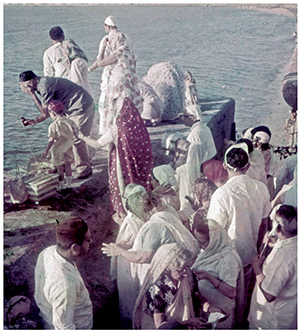
Zoroastrians paying obeisance to the waters on Avan roj, Avan mah
As a lay Parsi Zoroastrian who has humbly tried to educate himself about the faith of his ancestors, I have found much information in English language translations of the Gathas and the Avesta prayers. But we are deprived of opportunities to attend congregational prayers where we can understand what the priests are reciting. Added to this, we miss lessons and sermons drawn from the scriptures by a dharam guru (religious teacher) — a practice that is alien to Parsi Zoroastrians.
The only occasion I recall when a dharam guru engaged his flock in the language they could understand was during my teenage years. Though my participation was limited as I was a boarder at the Hyderabad Public School, I enjoyed the opportunity during vacations to attend a few classes conducted in English by the erudite scholar, the late Dastur (Dr) Navrooz Minochehr-Homji, during his brief tenure as a head priest at Hyderabad. He held regular classes on Zoroastrianism for the community. Though very few attended, I recall that my parents and their siblings were regulars, and I still possess a few of their exercise books filled with lesson notes.
Many educated Parsis are bewildered by claims that the recitation of prayers in the original Avesta language sends "vibrations” that are answered by Ahura Mazda. Such claims defy both common sense and the laws of physics (laws of nature.) Recently I received a WhatsApp post from a fellow Parsi that listed various chronic illnesses and the prayers to be recited to cure them! So, on that simple assumption, our doctors of divinity have also become medical practitioners!
All this leads me to humbly propose that we make a serious effort to understand our scriptures, before being misled with unfounded and incredible interpretations of prayers and religious rituals. Can we educate our priests about the idiomatic language of the Gathas, not just recite them mechanically? The priests should be able to draw on scriptural learnings and deliver sermons on current sociocultural issues at prayer gatherings. The Gathas are full of illustrations of correct human behavior. Our priests should be trained to draw upon those teachings and equate them to contemporary issues. The role of the priest should be transformed from parroting Avesta prayers to becoming true dharam gurus, educating Parsis on living Zoroastrian lives.
At a time when our numbers are spiraling downwards, we need to set right our assumptions. A few basic questions need to be answered: Is "racial purity” a spiritual requirement to be a Zoroastrian? Is conversion prohibited in the faith preached by Zarathushtra?
Having made what some may consider an audacious proposition, I recognize that practical challenges could deter its adoption.
Firstly, the current method of recruiting and training our priests would need to be fundamentally changed. The built-in insistence on heredity reduces the pool of available priests, not to mention the continued Indian Parsi prohibition of women becoming priests. A broader issue is the development of a curriculum in various modern languages that Zoroastrians use across the diaspora. We need nothing short of an overhauled seminary system that creates an intellectual infrastructure based on fundamental Zoroastrian scriptures. The transition will need a transformation of our priests from being performers to becoming teachers. An associated challenge will be the involvement of non-ordained scholars who, in some cases, may not be Zoroastrians, to design the required curricula.
Secondly, financial resources are always a built-in challenge for any endeavor. It is conceivable that once a plan for such a transformation is in place, a case for giving to such an enterprise may multiply 10-fold. Lay members of the community as well as mega-donor individuals, businesses and philanthropic trusts will be more easily motivated to invest in the effort.
There are many recently published books that can guide us to a better understanding of our scriptures and address these questions.
To move ahead, we will need the thoughtful insight of American philosopher Richard Buckminster Fuller: "You never change things by fighting the existing reality. To change something, build a new model that makes the existing model obsolete.”
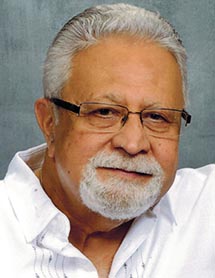
Kaoosji is a retired management professional in the field of national and international nongovernmental and non-profit organizations.