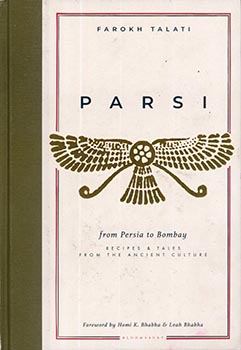
Parsi: From Persia to Bombay: Recipes and Tales from Ancient Culture by Farokh Talati. Published in 2022 by Bloomsbury Publishing Plc, 50 Bedford Square, London, WC1B 3DP, UK. Pp: 366. Price: Rs 2,099, £ 26.
Blurbs can be tricky. A well written one, from a convincing source, can persuade someone to pick up a book. Yet they can also be revealing, as with the two at the back of UK based chef Farokh Talati’s (pictured) cookbook, boldly titled Parsi: From Persia to Bombay.
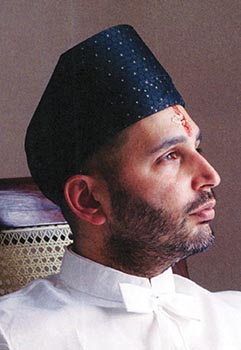 Both blurbs are from leading UK chefs Talati has worked with. He got his start with Angela Hartnett, one of the first British women chefs to win a Michelin star. "This is the one and only book you will ever need on Parsi cooking,” she writes.
Talati is currently head chef at St John Bread & Wine, set up by Fergus Henderson, celebrated for his simple British cooking with a particular focus on using all parts of the animal. "Sure to become a Parsi classic,” says Henderson, who is also shown in the book relishing Talati’s Parsi-Style Biryani and Stuffed Quails.
To both of which statements it’s hard not to reply, "Um… how would you know?” Hartnett and Henderson are experts on British cooking, but not exactly on Parsi food. Which might seem like a sour response to a generous gesture on their part, but it indicates a conceptual confusion that undermines a potentially excellent book.
There is much to like. The book is attractive, with clean, unfussy pictures of the food (by Sam A. Harris) and India (by Oliver Chanarin) facing pages of recipes written in a style that is authoritative, but not intimidating. You feel like you can make them and might actually want to — the sign of a good, usable cookbook.
Books like this are partly promotional vehicles for chefs, but Talati maintains a modest presence, rarely appears in pictures and keeps the personal anecdotes simple, yet relevant. A lot of the best sounding recipes in the book seem to be his own, like mayonnaise spiked with mango pickle, drumstick curry, sweet potato mash and grilled sweet corn, carrot and paneer salad. There are also nice tips for classic recipes, like his suggestion of adding the water from the coconut used for green chutney.
Most of the big hits of Parsi cooking feature, from aleti paleti to dhansak to oombariyoon. There are recipes for foods like topli na paneer which are becoming rare in India. For people coming to Parsi cooking for the first time this is clearly a better starting point than many of the classic cookbooks with their brief instructions and assumptions that people already know the basics and how the final dish should taste.
Yet it has to be said, the book lacks the sense of grounding you get from books like Bhicoo J. Manekshaw’s Parsi Food & Customs, Niloufer Ichaporia King’s My Bombay Kitchen or, more recently, Anahita Dhondy’s Parsi Kitchen. All these authors bring the experience of growing up in Parsi families in India, and cooking this food on a regular basis in both their personal and professional lives.
 Talati was born in the UK and trained as a chef in non-Parsi kitchens. He has real exposure to the cuisine from visits to India and running a Parsi supper club in London, yet something seems amiss with the claims of Hartnett and Henderson, or it’s the more than slightly clichéd "Persia to Bombay” subtitle, with its deliberately archaic use of both place names and blithe disregard of all the Parsi communities with deep roots beyond the megapolis.
This is not about authenticity, always a dubious concept, but more about publishers and packaging. The book seems rather obviously created to follow the huge success of Yottam Ottolenghi and Sami Tamimi’s Jerusalem. Ever since, there’s been a push to find other British chefs of varied backgrounds — Sabrina Ghayour, Georgina Hayden, Itamar Srulovich — and have them produce a cookbook on their "roots,” designed to the same template.
There’s nothing wrong with this, except a sense of missed opportunities. A slightly different trend examines the diversity in British cooking through chefs, like Talati, who have grown up there and seen how their home food is both preserved and changed by its new location. Gurdeep Loyal’s Mother Tongue: Flavours of a Second Generation is one example, and just as he chronicles British-Punjabi food, Talati might have been interestingly employed writing more directly about the British-Parsi culinary encounter.
Parsi food is, after all, the result of an Indian and Persian encounter, and it seems only right that it continues to change as the diaspora spreads beyond the subcontinent. It is surely just a matter of time before the Parsi-Australian encounter shows up on Masterchef, and Ichaporia King’s book has hints of the Parsi-American one, with her special Navroz menus for San Francisco’s Chez Panisse.
British-Parsi food draws on a far longer encounter, and one which has already taken on popular forms like the curry house versions of dhansak and pathia (patiyo). Talati shows hints of this in recipes like the venison berry pulao he presents, rather than simply trying to replicate the Britannia classic (itself an adaptation to the Indian desire for more gravy) or the Parsi version of the kedgeree (the British adaptation of khichri) he makes at St John, adding methi leaves to the smoked haddock, rice and dal.
Game pie is a fixture at St John, and Talati gives it a Parsi twist, again with methi leaves and jaggery, but there are so many other possibilities, starting with the oombariyoon mixture he gives, or the duck recipes in Katy Dalal’s Jamva Chaloji 2. A recipe for quince and rose paste isn’t Parsi at all, since quinces only grow in Kashmir in India (guavas might work), but it suggests how British-Parsi food could revive links with Iran, where quinces are native and from where varieties have been taken to be planted in the UK.
Hartnett and Henderson’s words of praise would make more sense for a book on British-Parsi food, and perhaps Talati will give us that someday.
VIKRAM DOCTOR
Doctor is a journalist based in Goa. He writes about food and the role it plays in Indian society. Despite his surname, he is not a Parsi, but grew up in Bombay with so many Parsi neighbors that he enjoys lacy cutlets, dhansak and patra-ni-machhi.