A chance observation and a remark led to the creation of vaccines
Dr Rajesh Parikh
Extract from Dr Rajesh Parikh’s book, The Vaccine Book for Covid-19 published by Sanganak Prakashan, 2021. Reprinted with permission from the author.
The joy I felt at the prospect before me of being the instrument destined to take away from the world one of its greatest calamities was so excessive that I found myself in a kind of reverie.” Edward Jenner
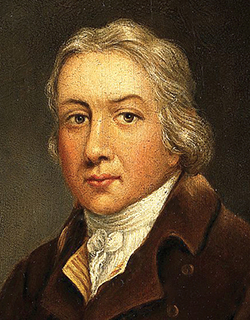
An English physician living in Gloucestershire over 250 years ago is the father of vaccination. Edward Jenner even invented the term! Being a country doctor, he had extensive knowledge of farming communities. Besides, he was an eager student of natural history, writing detailed articles on the cuckoo and on the dormouse. Jenner was invited to join Captain Cook’s celebrated South Seas voyage to classify flora and fauna. Fortunately, he declined and focused instead on medicine and on milkmaids in the English countryside. He realized that those among them who had marks on their hands and forearms from cowpox seldom had their faces blemished by smallpox scars. Hmmm!
Jenner postulated that pus from cowpox blisters conferred protection from smallpox. Therein lay the foundations of the world’s first clinical trial. Rural England, while being populated by milkmaids, had a paucity of carriage chasing lawyers. Hence, Jenner was not excessively preoccupied with administering informed consents. He simply caught hold of his gardener’s son, eight-year-old James Phipps, and injected him with the pus from the cowpox blister of a milkmaid. The lad developed fever but no full-blown infection. Next, Jenner inoculated James with smallpox scrapings several times but no disease followed. Jenner’s experiment was a resounding success! James’s forearms probably not so.
Jenner was unstoppable. He got 22 more participants into his study and combined the results into 23 case histories. He published at his own expense a book, now a classic in the annals of medicine, Inquiry into the Causes and Effects of the Variolae Vaccine. His assertion that "cowpox protects the human constitution from the infection of smallpox” laid the foundations of vaccine development.
An oil painting of Jenner performing his first vaccination on James Phipps, a boy aged eight, May 14, 1796
Left: James Gillray’s 1802 caricature of Jenner vaccinating patients who feared it would make them
sprout cow-like appendages; right: 1825 memorial to Jenner by Robert William Sievier, in Gloucester Cathedral
How did a simple country doctor formulate the vaccine concept? Cynical colleagues claimed it was plain eavesdropping. Jenner supposedly overheard a milkmaid from Bristol boast, "I shall never have smallpox for I have had cowpox. I shall never have an ugly pockmarked face.” Quite clearly there are benefits to the perils of hanging out with vain women!
As acceptance of his discoveries grew, Jenner became a celebrity who was feted by aristocracy. The British Parliament awarded him the modern equivalent of a million dollars. Oxford, Cambridge and Harvard Universities bestowed honors. In 1821, King George IV appointed him as his physician extraordinaire. Napoleon Bonaparte used Jenner’s method to vaccinate all French troops and awarded Jenner a medal. When Jenner requested Napoleon to free two English prisoners, Napoleon acquiesced remarking he could not "refuse anything to one of the greatest benefactors of mankind.”
In December 1979, 183 years after Jenner’s pioneering work, smallpox was eradicated. In May 1980, the World Health Organisation (WHO) issued its official declaration, "The world and all its peoples have won freedom from smallpox.” It is estimated smallpox had claimed over five million deaths each year, but in reality this estimate is likely to be lower. Besides, the suffering avoided from infections is several fold higher. Nearly a billion lives have been saved by vaccination. Which other human invention can claim to have averted so much suffering and death?
Although Jenner invented vaccination, a similar procedure called variolation possibly originating in India had been present for over 3,000 years. The practice consisted of administering the dried powder of the scabs of smallpox infected individuals to healthy ones as protection. The "Woodia” (Oriya) Brahmans are known to have used it since time immemorial. The process is described in the ancient Sanskrit text Sacteya Grantham written in 900 AD devoted to Dhanwantari, the Indian sage and physician. Recently, the health minister of India [also an eminent ear, nose, throat (ENT) surgeon], Dr Harsh Vardhan alluded to the text and was quickly criticized by proponents of Western medicine for misappropriation of the credit for Jenner’s invention.
During Jenner’s time, variolation was being practiced in England and some suggest that he may have derived vaccination from variolation rather than by overhearing a milkmaid. Chinese physicians studying at the Nalanda and Takshashila Universities may have carried the technique to China where it got refined before travelling to Africa and Turkey and onwards to Europe and America by the 18th century. But was Jenner aware of it?
Undeniably, Jenner invented vaccination and for over 100 years vaccination was synonymous with cowpox inoculation to prevent smallpox. However, Jenner’s work, while invaluably benefitting humanity, provided no understanding of how the process actually worked. For that we have to thank the brilliant French chemist, Louis Pasteur. In five years, between 1880 and 1885, he invented three major vaccines, studied their mechanisms of action and established the field of immunology.